Professional Plumbing Services in Norwich
E-mail us: viktors.plumbing@gmail.com
24 Hour Emergency Plumbing Service

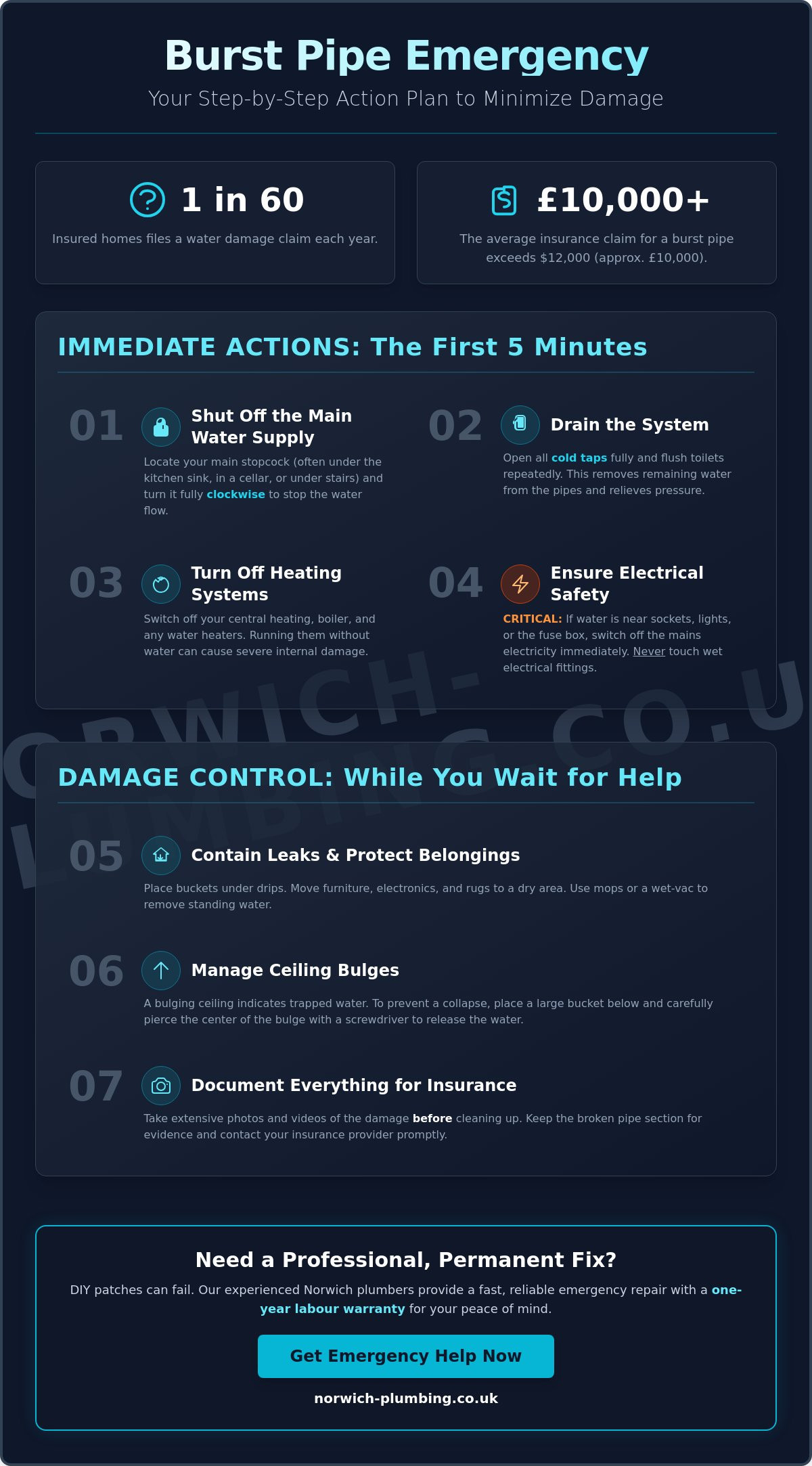
Did you know that about 1 in 60 insured homes files a claim for water damage or freezing every single year? This statistic shows that plumbing emergencies are more common than most people think. Knowing exactly what to do when a pipe bursts can mean the difference between a minor cleanup and an insurance claim that averages over $12,000. We understand the immediate panic that sets in when you see water pooling or hear a sudden rush behind your walls. The fear of structural damage and the anxiety over repair costs are completely natural when your home is at risk.
You can regain control of the situation quickly by following a clear plan. This guide provides the exact steps you need to stop the water flow, prevent electrical hazards, and protect your property before the professional arrives. We will walk you through finding your shut-off valve, securing your living space, and identifying when it is time to call for an emergency leak repair. By the end of this article, you will have a dependable strategy to handle any burst pipe with confidence and keep your home safe.
When you realize a pipe has failed, your priority is to stop the flow. Every second counts to minimize water damage within your property. Knowing exactly what to do when a pipe bursts helps you stay calm and focused. Locate your main stopcock immediately. Turn it clockwise to shut off the incoming water supply. This single action stops the pressure and prevents hundreds of gallons of water from flooding your floors and walls.
In many Norwich homes, the stopcock is typically found under the kitchen sink or in a pantry. If you live in an older Norfolk property, check for the valve under the stairs or in a cellar. In some cases, the stopcock may even be located outside near your property boundary. If you find the valve is seized, avoid using heavy tools or excessive force. Wrap a towel around the handle for a better grip and apply steady, firm pressure. If it remains stuck, wait for a professional to handle it to avoid snapping the internal mechanism.
Once the main supply is off, you must remove the water already sitting in your pipes. Open all cold water taps to drain the system quickly. Flush every toilet several times to empty the cisterns. This relieves remaining pressure and stops leaks from continuing after the main valve is shut. Switch off your central heating and any water heating systems. This prevents your boiler from running while empty, which can cause significant internal damage.
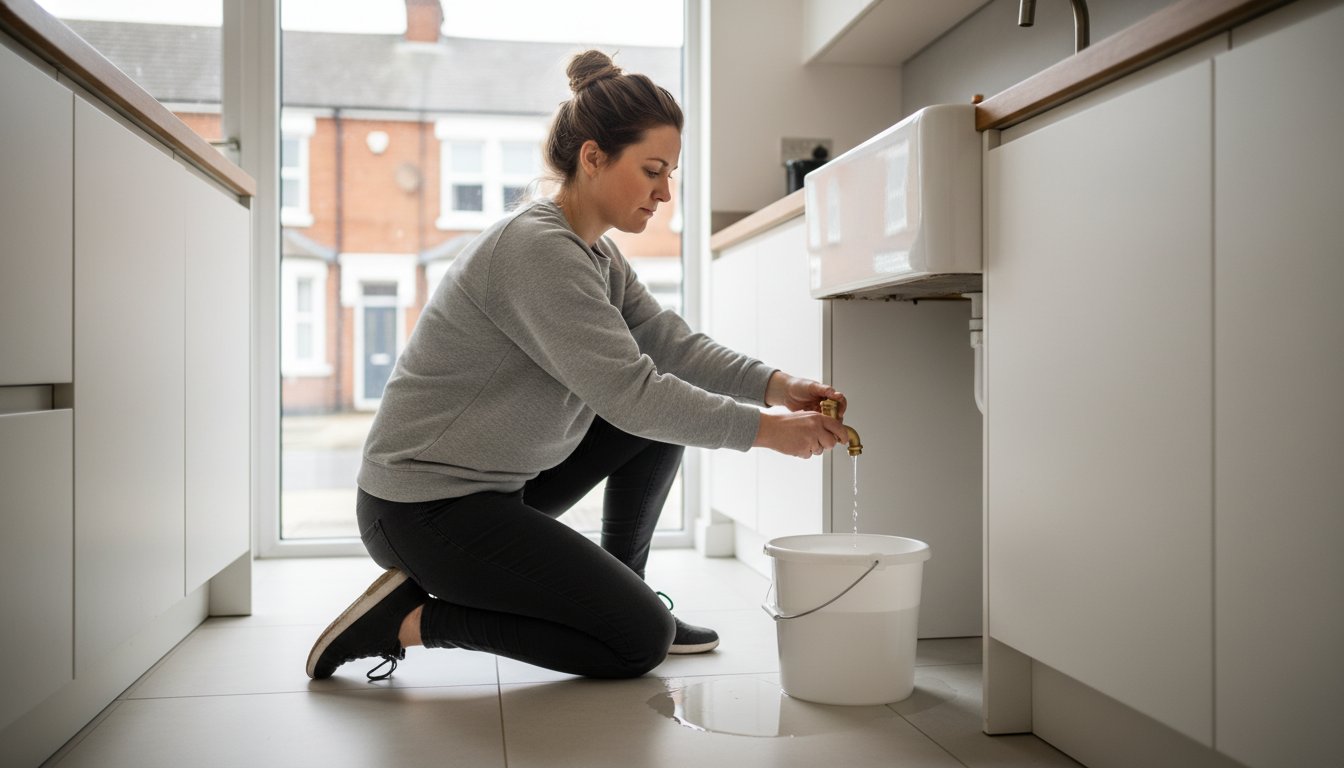
Once you’ve stopped the water flow, move quickly to protect your belongings. Collect escaping water in buckets or pots immediately. This simple step prevents liquid from soaking into your floorboards or joists. Move rugs, small furniture, and electronics to a dry area of the house. Use a mop or a wet-vacuum to remove standing water from hard floors. This fast action minimizes replacement costs and prevents long-term moisture issues like mold growth. While you’re managing the current crisis, it’s helpful to consider preventing them in the first place through seasonal pipe checks. Understanding what to do when a pipe bursts involves more than just turning a valve; it’s about active damage mitigation.
Look up for signs of pooling water. A bulging patch of plasterboard is a serious warning sign. If you see this, the water is trapped above the ceiling and could cause a sudden collapse. You can safely release this pressure by piercing a small hole in the center of the bulge with a screwdriver. Place a bucket underneath first to catch the controlled stream. This prevents the entire ceiling from coming down and makes the eventual repair much simpler.
Document every detail of the incident. Take clear photos and videos of the burst pipe and any damaged property before you start cleaning. When the plumber arrives, ask them to save the damaged section of pipe. This serves as vital evidence for your insurer. Make a list of all affected items and gather original receipts if you have them. Contact your insurance provider early to confirm your coverage for emergency plumbing services. Knowing what to do when a pipe bursts ensures you have the documentation needed to support a successful claim. If you need a permanent fix, our team provides professional emergency leak repair to secure your home.
Fixing a burst pipe requires more than a temporary clamp. While a DIY patch might seem like a quick fix, these often fail under the intense pressure of your main water supply. A qualified plumber doesn’t just repair the break; they assess the integrity of the surrounding pipework to ensure there are no other weak points. Professional intervention is the only way to guarantee your home remains dry. Choosing a local expert with over 20 years of experience in Norwich ensures the job is done right the first time. For added peace of mind, we provide a one-year labor warranty on every emergency leak repair we perform.
Prevention is always better than an emergency. Install high-quality foam lagging on all exposed pipes in unheated areas like lofts and garages. During extreme cold snaps, keep your heating on a low constant setting, ideally between 12 and 15°C. This keeps the water moving and prevents ice from forming inside the lines. Scheduling regular preventative plumbing maintenance is your best defense against the stress of a winter emergency. Understanding what to do when a pipe bursts is essential, but stopping it before it starts is even better.
Knowing what to do when a pipe bursts includes recognizing the scale of the problem. A small, manageable drip might wait for a scheduled visit, but a full burst requires an immediate response to stop structural damage. A local Norwich-based plumber can arrive quickly, reducing the time your home is exposed to rushing water. We prioritize safety and efficiency in every task. If you are facing an active flood, contact Viktor’s Plumbing Services for 24/7 emergency support to secure your property and restore your water supply.
Handling a burst pipe is a high-pressure situation, but you now have the tools to manage it effectively. By shutting off the main valve and draining the system immediately, you’ve already taken the most important steps to protect your property. Remember to document every detail for your insurance claim and keep any damaged pipe sections as evidence. Knowing what to do when a pipe bursts allows you to act with confidence rather than panic. You’ve minimized the risk of structural damage and prepared your home for a permanent fix.
When you need a professional to take over, we’re ready to help. With nearly 20 years of local plumbing experience, Viktor provides dependable 24/7 emergency response across Norfolk. Every emergency leak repair we perform comes with a full one-year labour warranty, giving you long-term peace of mind. Call Viktor now for 24/7 emergency burst pipe repair in Norwich. We’re committed to getting your home back to normal quickly and safely. You don’t have to face this plumbing emergency alone.
Call a professional plumber immediately after you have successfully shut off your main water supply. Water damage begins within minutes and often leads to structural issues or mold if left untreated. Even if you’ve stopped the flow, a professional assessment ensures the pipework is secure and meets current safety standards. Rapid response is key to minimizing the total cost of restoration in your Norwich home.
Most standard home insurance policies cover “escape of water” damage, which includes the cleanup and restoration of your property. However, some policies may not cover the actual cost of the pipe repair itself. Review your specific policy documents or contact your insurer to understand your coverage limits. Keep all damaged parts and receipts from your emergency leak repair to support your claim effectively and ensure you receive a fair payout.
Use emergency repair tape only as a temporary measure while you wait for a technician to arrive. This tape often fails under full mains pressure and is not a permanent solution for your plumbing system. Knowing what to do when a pipe bursts involves understanding that DIY patches are only stop-gap measures. A professional repair is necessary to ensure the pipe is safe and won’t fail again under normal usage.