Professional Plumbing Services in Norwich
E-mail us: viktors.plumbing@gmail.com
24 Hour Emergency Plumbing Service

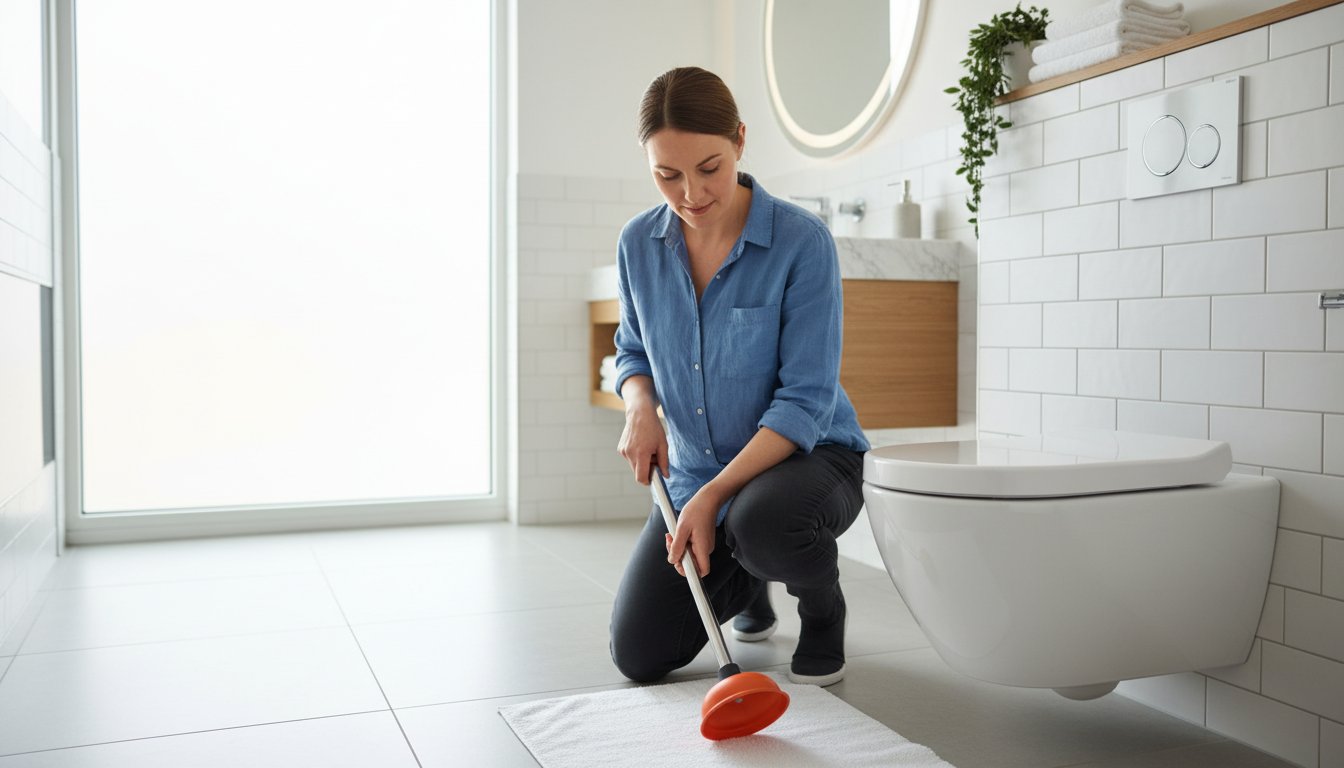
That sinking feeling when the water in the toilet bowl rises instead of falls is a stressful moment for any homeowner. Suddenly, you have an unusable toilet, the immediate worry of a messy overflow, and the looming thought of a costly emergency call-out. The good news is that you don’t always need to call for help immediately. Learning how to unblock a toilet with the right technique can often solve the problem quickly and cleanly, saving you both time and money.
In this straightforward guide, we share our professional, step-by-step methods for clearing common blockages using simple tools. We’ll give you the confidence to tackle the issue safely and effectively. Crucially, we will also outline the clear warning signs that indicate a more serious problem that requires an expert. As your trusted local plumbers in Norwich, we want to empower you to handle the small jobs and know precisely when it’s time to call us for a fast, reliable solution.
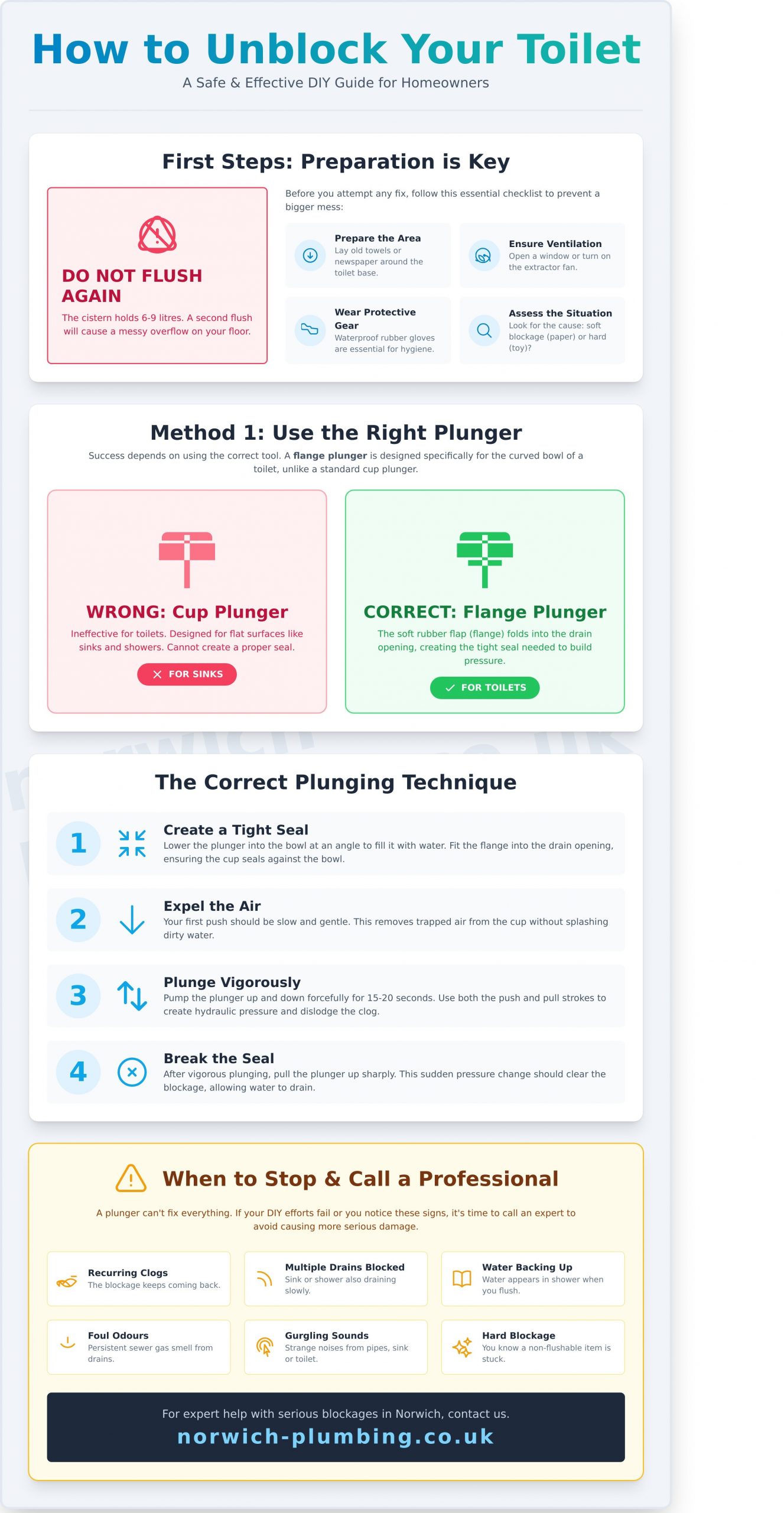
A blocked toilet is a common household problem that can cause significant stress. Before you start searching for solutions on how to unblock a toilet, it’s crucial to take a few moments to prepare. Acting calmly and methodically can prevent a simple clog from turning into a major water damage incident. These first steps are essential for a safe and clean resolution.
Before attempting any fix, follow this simple preparation checklist:
With your gloves on, take a moment to look into the toilet bowl. A quick assessment helps you choose the right method for the job. Can you see the cause of the blockage? An excess of toilet paper or wet wipes creates a soft blockage, which is often easier to clear. If a child’s toy or a dropped toiletry item is visible, you are dealing with a hard blockage. Also, note if the water level is high and static, or if it is draining away very slowly. This information will guide your next actions.
The instinct is often to flush again, hoping the extra force will clear the blockage. This will almost certainly make the situation worse. Your toilet’s cistern holds a set amount of water-typically between 6 and 9 litres. When you flush, all of this water is released into the bowl at once. Understanding the basic mechanics of how a flush toilet works makes it clear why a second flush is a bad idea. If the drain is already blocked, this extra volume has nowhere to go but up and over the rim, causing a messy and unhygienic overflow onto your bathroom floor.
Before reaching for harsh chemicals, the humble plunger is your most effective and safest tool. However, success depends entirely on using the correct type of plunger and the proper technique. Many homeowners are surprised to learn that not all plungers are designed for toilets. Using the wrong one can be ineffective and messy.
The goal is not to force air through the pipe, but to use the water in the bowl to create hydraulic pressure. This pressure will push and pull at the blockage, dislodging it safely. Ensure there is enough water in the toilet bowl to completely submerge the cup of the plunger before you begin.
The standard flat-bottomed cup plunger you might have for a sink is not the right tool for the job. To unblock a toilet effectively, you need a flange plunger. This type has a soft rubber flap (the flange) that folds out from the bottom of the cup. This flange is designed to fit perfectly into the toilet’s drain opening, creating a tight seal that is essential for building pressure.
[Image: Side-by-side comparison showing a red cup plunger next to a black flange plunger, with arrows pointing out the key differences.]
You can purchase a flange plunger for under £10 at most local hardware or DIY shops. While it is possible to find guides on how to unblock a toilet without a plunger, investing in the correct tool will save you significant time and effort for this common household problem.
With the right tool in hand, follow these steps for a safe and effective result. This is the most reliable method for how to unblock a toilet manually.
If the clog remains after several attempts, do not continue to flush the toilet. It is time to move on to a different method or call a professional.
If you do not have a plunger, do not worry. Many minor clogs caused by excess toilet paper or organic waste can be cleared with common items you already have in your kitchen. These methods provide a practical first step in learning how to unblock a toilet without specialist tools. They are generally safe for your pipes and offer a less aggressive approach than harsh chemical drain cleaners. The same gentle, chemical-free techniques are also useful if you are dealing with a slow draining sink elsewhere in your home.
Important Safety Note: Never mix different chemical cleaning products. The combination can create toxic gases. If one method does not work, flush the toilet with water (if possible) before attempting another.
This simple technique uses lubrication and pressure to dislodge a blockage. The dish soap helps reduce friction, allowing the waste to move more freely through the pipes.
Warning: Use hot tap water, not boiling water. The extreme heat from boiling water can cause thermal shock and crack the porcelain of your toilet bowl, leading to a much more expensive problem.
This classic combination creates a powerful chemical reaction that can break down and dissolve many common blockages. It is one of several effective eco-friendly ways to unblock a toilet that avoids using corrosive chemicals.
For blockages that are physically close to the bowl, a wire coat hanger can sometimes be used to manually break them apart. We advise extreme caution with this method, as you can easily scratch or damage your toilet.
If a plunger hasn’t resolved the issue, the blockage is likely stubborn or located further down the drain. Before calling a professional, your next best tool is a toilet auger, also known as a drain snake. This specialist tool provides a more direct and effective way to tackle deep clogs without risking damage to your toilet bowl, unlike a straightened wire hanger which can easily cause scratches.
A toilet auger is a worthwhile investment, available for around £20-£40 from most UK hardware stores like B&Q or Screwfix. It is a reliable tool that offers a safe and powerful solution for serious blockages.
A toilet auger is specifically designed for toilets. It consists of a long, flexible steel cable housed inside a rigid tube. One end has a crank handle, and the other has a corkscrew-like tip to break apart or retrieve obstructions. Crucially, the section of the tube that enters the bowl is protected by a rubber or vinyl sleeve, which prevents the metal from scratching the porcelain surface as you work.
Using an auger is a straightforward process. This is often the most effective DIY method for how to unblock a toilet when the clog is beyond the U-bend. Follow these steps carefully for a safe and successful result:
If the auger doesn’t clear the blockage or you cannot move it past a certain point, the problem may be in your main drain line. For these complex issues, it’s best to seek professional help. If you’re in Norwich or the surrounding Norfolk area and need an expert solution, you can rely on our team. Contact Viktor’s Plumbing Services for a transparent, no-obligation quote.
You have tried the plunger and other home remedies, but the blockage remains. Knowing when to put the tools down is not admitting defeat; it is the smartest step you can take. A persistent clog can be a symptom of a much larger issue within your drainage system, and continuing with DIY methods could lead to water damage, a bigger mess, and ultimately, a more expensive repair.
Calling an expert is the safe and efficient choice, protecting your property and your peace of mind.
If you are struggling with how to unblock a toilet and the problem persists, it is time to call for professional help. Look out for these key warning signs that indicate a problem beyond a simple clog:
These symptoms often point to a deeper blockage in your main drain line that a simple plunger cannot reach.
When you encounter these issues, it’s crucial to contact a qualified plumber. For instance, residents in London and Kent can rely on specialists like Plumbfix 365 who have the right tools to tackle serious drain problems without causing damage to your property.
It can be tempting to reach for a bottle of chemical drain cleaner, but we strongly advise against it. These highly corrosive liquids can cause significant damage to your pipework, especially in older Norwich properties with cast iron or clay pipes. Worse, if the chemical fails to clear the solid blockage, it leaves a bowl full of toxic, hazardous water. This is dangerous for you and creates a hazardous working environment for the plumber who arrives to fix the problem safely.
A professional plumber doesn’t just clear the immediate clog; we diagnose the root cause. At Norwich Plumbing, we use specialist equipment like CCTV drain cameras and high-pressure water jetting to locate and remove deep-seated blockages quickly and without damage. We ensure the problem is fixed properly, giving you a reliable, long-term solution.
Don’t let a blocked toilet disrupt your day any longer. If you’re in Norwich or Norfolk, call us for immediate help. We provide a transparent, dependable service to get your home back to normal.
You now have a clear plan for tackling a blockage. This guide has shown you the most effective methods for how to unblock a toilet, from using the correct plunger technique to deploying a toilet auger for tougher clogs. Remember, the key is to assess the situation calmly and choose the right tool for the job. For many common blockages, these DIY steps are all you will need to restore proper function.
However, some clogs are too stubborn for DIY solutions. If you’ve tried these methods without success, it’s time to call in a professional to prevent further damage. As your trusted, experienced plumber in Norwich and Norfolk, we are ready to help. We provide a 24/7 emergency service and back all our work with a one-year labour warranty for your complete peace of mind. Toilet still blocked? Call our Norwich emergency plumbers for a fast, reliable fix.
Don’t let a blocked toilet disrupt your day. With the right help, your plumbing will be back to normal in no time.
We strongly advise against using bleach to unblock a toilet. Bleach is a powerful disinfectant, but it is not effective at dissolving common blockages like toilet paper or wet wipes. More importantly, it can react with other substances in your pipes to create hazardous fumes. For a safe and effective solution, it is always better to use a plunger or call a professional plumber.
First, do not flush again. This will cause the bowl to overflow. Protect your floor with old towels and carefully bail out excess water into a bucket until the bowl is about half full. This creates space to use a plunger effectively without splashing contaminated water. If plunging does not work or you are uncomfortable with this step, call a professional for immediate assistance.
Your toilet is only designed to handle human waste and toilet paper. You should never flush wet wipes (even those labelled ‘flushable’), cotton buds, sanitary products, nappies, kitchen roll, or dental floss. These items do not break down properly in the sewer system and are the most common cause of serious blockages we see in Norwich homes. Proper disposal is key to a clear system.
This also includes electronic items like disposable vapes, which contain batteries and plastics that can cause serious blockages and environmental harm. For information on these products and their correct disposal, specialist UK retailers such as 888 Vapour are a valuable resource.
The cost for a professional to unblock a toilet in Norwich typically ranges from £75 to £150. The final price depends on the severity of the blockage and the time it takes to clear. At Norwich Plumbing, we provide a transparent, no-obligation quote before we start any work. This ensures you understand the full cost upfront, with no hidden charges or surprises.
A recurring blockage often points to a deeper issue than a simple clog. It could be caused by a problem in your main drain line, low flush pressure from an older toilet, or even a blocked plumbing vent. Consistently flushing unsuitable items can also cause this. We can investigate the root cause to provide a lasting solution, ensuring the problem does not return. If your toilet is constantly running between blockages, this could indicate running toilet causes that need addressing to prevent water waste and further complications.
Yes, this is a very common reason for a stubborn blockage. Small objects like children’s toys, toilet freshener cages, or even a mobile phone can easily get lodged in the toilet’s S-bend. If you suspect this is the case, it is best not to keep flushing. A professional plumber has the right tools, like a toilet auger, to safely retrieve the object without damaging your toilet. Additionally, if you notice your toilet making unusual sounds or running continuously after clearing a blockage, you may be dealing with running toilet causes that require separate attention to prevent water waste.