Professional Plumbing Services in Norwich
E-mail us: viktors.plumbing@gmail.com
24 Hour Emergency Plumbing Service

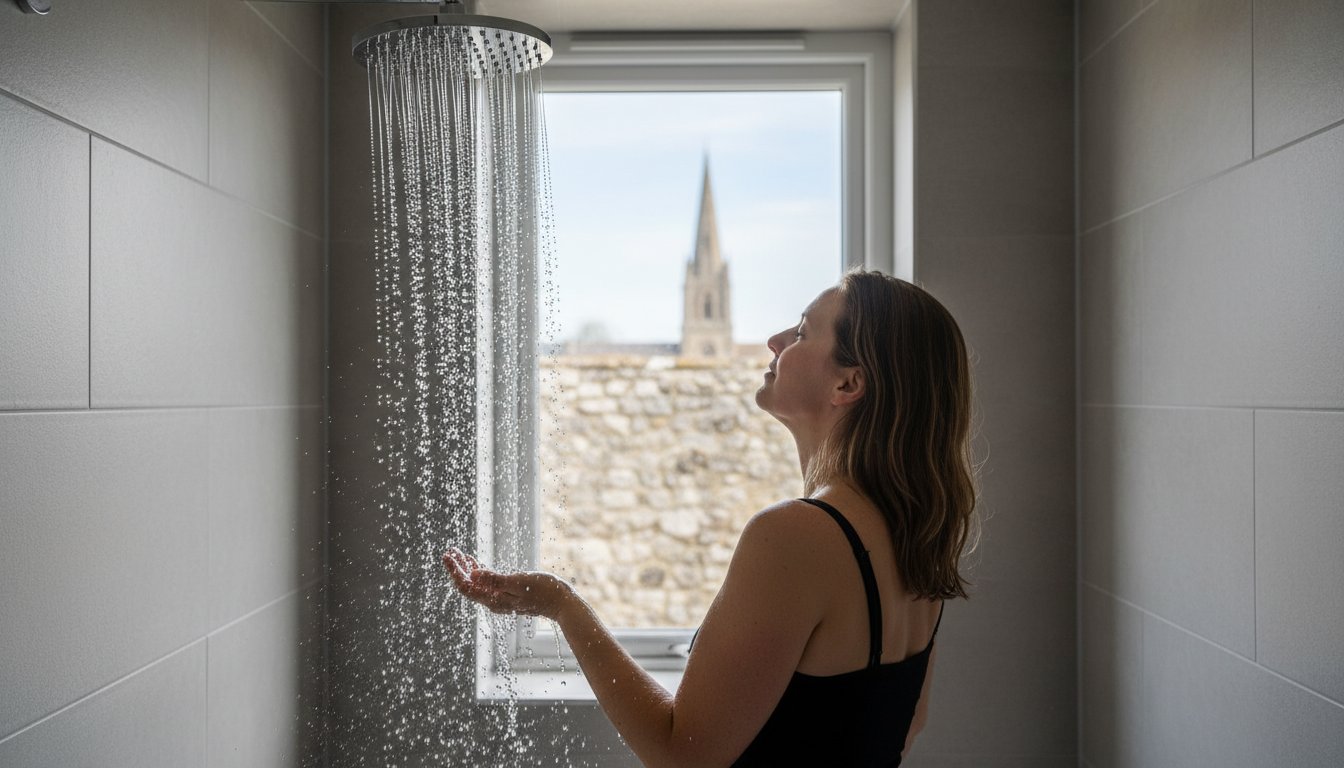
Last Tuesday, a homeowner in Thorpe St Andrew stood under a shower head that was barely dripping, wondering why their morning routine had become such a struggle. It’s a common frustration across Norfolk. You expect a refreshing start to the day, but instead, you’re left waiting 15 minutes for a bath to fill or watching your combi boiler cut out exactly when you need it most. We understand that weak water flow isn’t just an inconvenience; it’s a disruption to your home’s comfort and efficiency.
You likely feel that your plumbing should just work without you having to think about it. This guide shows you exactly how to improve low water pressure in your property. We’ll help you discover the common causes of weak flow and provide practical, step-by-step methods to restore full pressure to your Norfolk home. You’ll gain the knowledge to identify whether the issue is internal or a matter for the water board.
We’ll walk you through everything from simple valve checks to technical solutions like installing an unvented cylinder. By the end of this article, you’ll have a clear plan for a permanent fix and the confidence to enjoy a powerful shower once again.
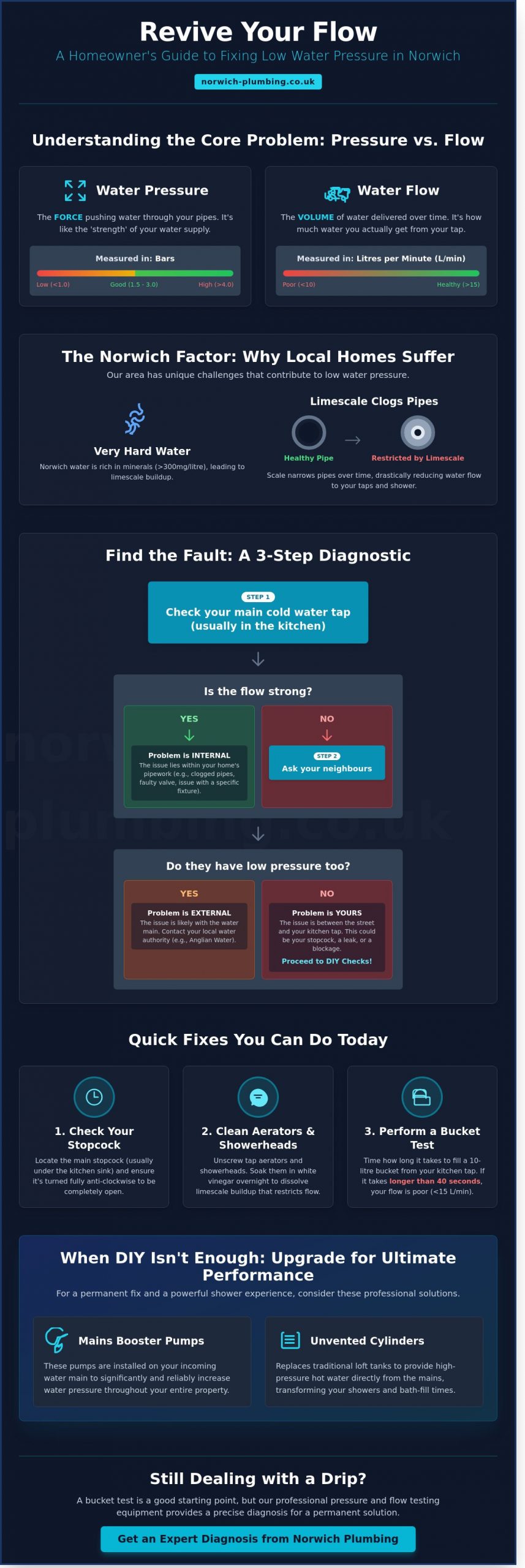
Water pressure is the physical force that pushes water through your internal plumbing and out of your fixtures. It’s often confused with water flow, but they are two distinct measurements. While pressure is the force, flow is the actual volume of water moving through the pipe at any given time. If you want to improve low water pressure, you must first identify which of these factors is failing. Norwich presents specific challenges because our local infrastructure combines historic Viktorian mains with modern supply systems. Understanding how water supply networks operate helps explain why pressure varies across different postcodes, from the Golden Triangle to Thorpe St Andrew.
In the UK, we measure water pressure in “bars.” One bar is the amount of force needed to push water 10 metres upwards. Most modern appliances, such as unvented cylinders and powerful showers, require a steady reading to function correctly. A reading of 1.5 to 3.0 bars is generally considered good for a standard residential property. If your pressure drops below this, you’ll notice sluggish taps and temperamental boiler performance.
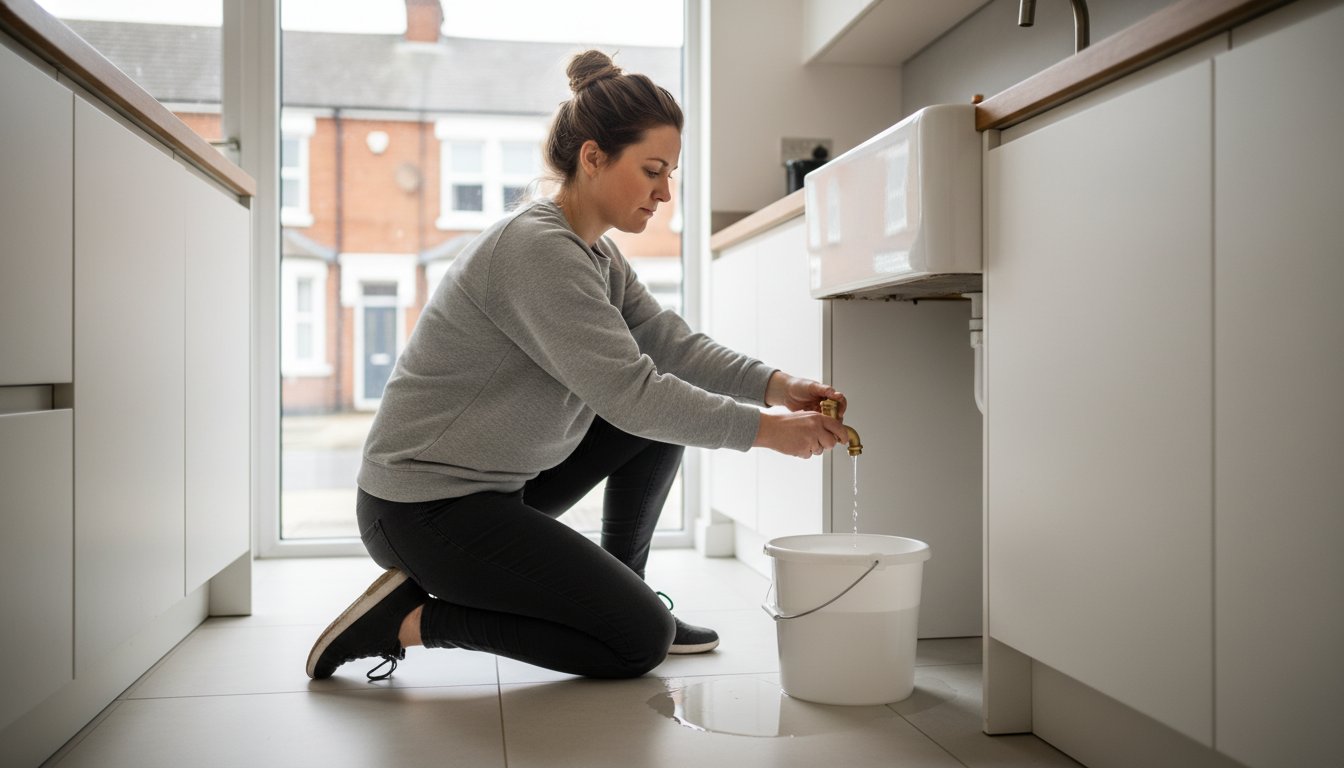
Water companies have a statutory obligation to provide a minimum pressure of approximately 1 bar at the point where the communication pipe joins your property. However, 1 bar often feels inadequate for busy households with multiple bathrooms. You can estimate your flow rate with a simple bucket test. Place a 10-litre bucket under your kitchen tap and turn it on full. If it takes longer than 40 seconds to fill, your flow rate is likely below 15 litres per minute, which is the benchmark for a healthy system. Pressure often varies between neighbours on the same street. This happens because of differences in house elevation, the condition of internal stopcocks, or the specific diameter of the lead or plastic pipes connecting to the main supply.
Norwich is officially classified as a “very hard” water area. Data from local suppliers shows that our water contains high concentrations of calcium carbonate, often exceeding 300mg per litre. This mineral content leads to significant limescale buildup. Over several years, scale attaches to the inside of your copper pipes, narrowing the “lumen,” or the internal diameter. This restriction forces the water through a smaller space, which reduces the volume reaching your taps. You’ll often see the first signs of this on your tap aerators or showerheads. When these small mesh screens clog with white, chalky deposits, it creates a perceived drop in pressure. Descaling these fixtures is a quick way to improve low water pressure before investigating more complex mechanical issues.
Identifying the source of the problem is the first step toward a solution. You should determine if the trickle is restricted to your bathroom or affecting every outlet in the house. A common culprit is the internal stopcock. This valve, usually found under the kitchen sink, controls the flow into your home. If it was recently turned for a repair, it might not be fully open. A half-turn can significantly restrict your flow.
Many Viktorian and Edwardian terraces in Norwich, such as those in the Golden Triangle or NR3, often share a single communication pipe. This means your flow depends on your neighbours. If three households use the washing machine simultaneously, your shower will suffer. Persistent drops might also signal a hidden leak. Watch for unexplained damp patches or a water meter that spins when all taps are off. To improve low water pressure, you must first rule out these basic mechanical failures.
Start your diagnosis at the cold kitchen tap. This tap is usually fed directly from the water main. If the flow is strong here but weak in the upstairs bathroom, the problem lies within your internal pipework. If the kitchen tap is also a trickle, check with your neighbours. When an entire street is affected, the issue sits with Anglian Water rather than your property.
The regulator sets specific water pressure standards that companies must maintain. This is typically a minimum of seven metres static head at the communication pipe. If you suspect your supply falls below this level, we can provide a professional plumbing assessment to confirm your readings and help you communicate with the water board.
Your home heating setup dictates your daily experience. Gravity-fed systems rely on a header tank in the loft. The pressure depends entirely on the vertical distance between the tank and the tap. A shower located directly under a tank will always feel weak because it lacks “head.”
Combi boilers require a specific internal pressure to function, usually between 1.0 and 1.5 bar. If the boiler gauge drops, your hot water flow will vanish instantly. Modern Norfolk homes often use unvented cylinders. These systems take water directly from the mains at high pressure, providing the best performance for multi-bathroom properties. Understanding these mechanics is vital to improve low water pressure effectively and choose the right upgrade for your specific layout.
You don’t always need a professional to restore your home’s flow. Many Norwich homes suffer from restricted movement within the pipes rather than a supply issue from the mains. Following a few logical steps helps you identify if the problem is a simple blockage or a mechanical setting. If you want to improve low water pressure quickly, start with the most accessible parts of your plumbing system.
Locate your internal stopcock; it’s usually under the kitchen sink or tucked away in a pantry. Ensure it’s turned fully anti-clockwise to allow maximum flow. Don’t force the valve if it feels seized, as this can lead to leaks. If you have access to the external water meter valve, check that it’s also fully open. A valve that’s only 25% closed can significantly reduce the volume of water reaching your taps. This is a common oversight after recent building work or utility maintenance in the local area.
Norfolk is known for hard water, which leads to limescale build-up in tap aerators and showerheads. Unscrew the small mesh nozzle at the end of your tap and soak it in white vinegar or a descaling solution for 30 minutes. The EPA WaterSense program highlights how faucet design and maintenance directly impact flow rates and user satisfaction. If your taps are clear but the flow remains weak, fixing a dripping tap can sometimes improve overall system stability by ensuring valves seal correctly.
Sometimes the issue lies deeper within the fixture. If a specific mixer tap is underperforming, the internal ceramic cartridge might have failed or become clogged with grit. Replacing these cartridges is a standard task that often restores full pressure to a single room. You should also check for physical obstructions in the system:
Monitoring these components allows you to improve low water pressure without immediately investing in new pumps or pipework. If these DIY steps don’t resolve the issue, it suggests a more complex problem, such as a hidden leak or a failing pressure reducing valve, which requires a professional assessment.
If simple fixes don’t improve low water pressure, the issue often lies deep within the infrastructure of your Norwich home. Older properties across Norfolk frequently suffer from outdated pipework. Lead or galvanised steel pipes can corrode or accumulate heavy limescale over many decades. This narrows the internal diameter significantly and restricts the volume of water reaching your taps. Replacing these old lines with 25mm MDPE (Medium Density Polyethylene) or modern copper piping often restores the flow your household needs for modern living.
An intelligent mains booster pump, such as the Salamander HomeBoost, is a dependable way to improve low water pressure legally. UK water regulations strictly prohibit pumping more than 12 litres per minute directly from the mains. These pumps monitor your flow and kick in only when needed to maintain that 12-litre limit. It’s important to understand the difference between a shower pump and a whole-house booster. A shower pump only affects the specific outlet it’s attached to, whereas a booster pump supports the entire property. For large Norfolk houses with multiple bathrooms, an accumulator tank is often the superior choice. These tanks store water in a pressure vessel. They provide a silent, high-volume reserve that allows several showers to run at once without any noticeable drop in performance.
Homeowners often find that a new kitchen tap installation doesn’t solve a weak flow if the property still relies on a traditional gravity-fed tank in the loft. These older systems depend entirely on the height of the tank to create pressure. We frequently recommend converting to an unvented hot water cylinder. This system takes cold water directly from the mains and keeps it under high pressure. It delivers a consistent “power shower” experience throughout the house without the need for noisy individual pumps. Scheduled plumbing maintenance allows our engineers to test your current flow rates and determine if an unvented cylinder is the right investment for your specific plumbing layout.
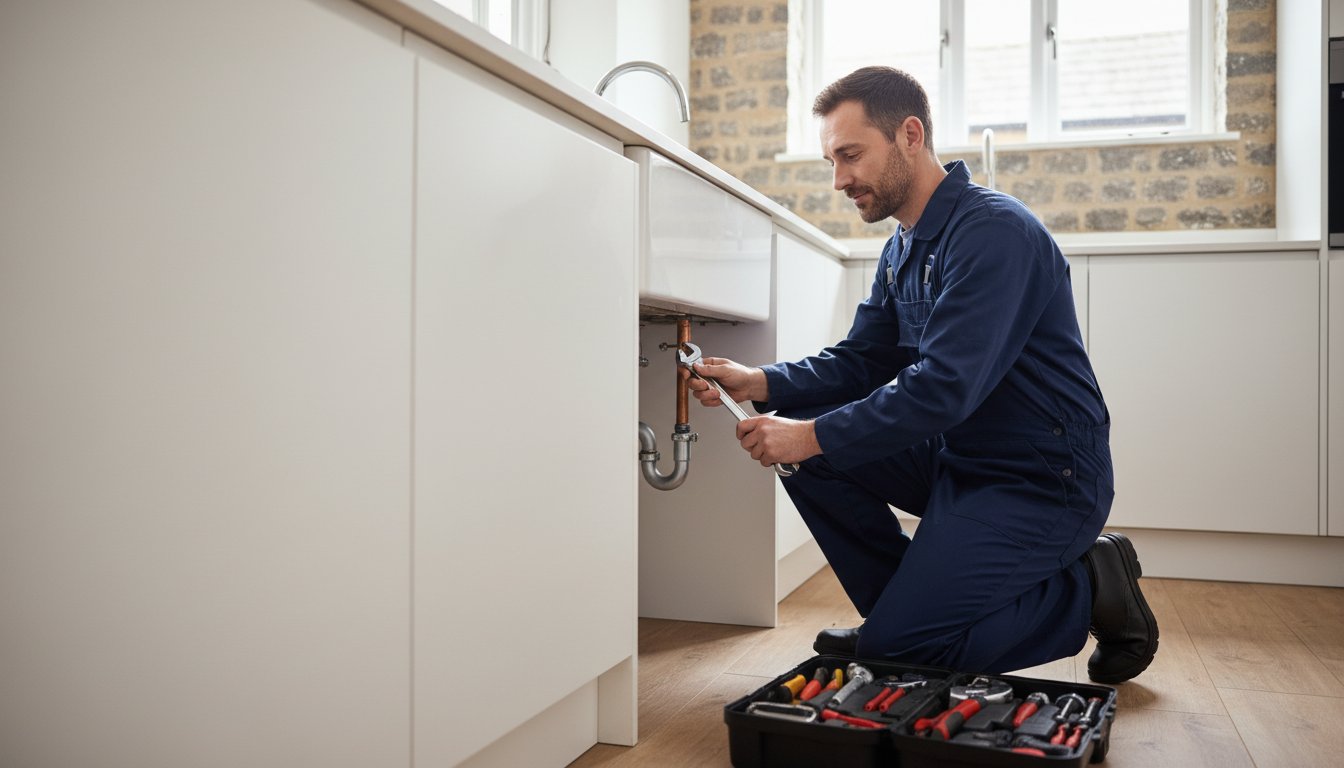
We use calibrated gauges to measure both static pressure, which is the force when water is off, and dynamic pressure, the force when taps are running. This distinction is vital for a permanent fix. A DIY bucket test only measures flow, but it cannot pinpoint a faulty pressure-reducing valve or a partially closed internal stopcock. Our engineers identify specific bottlenecks that are often invisible to the untrained eye. These include:
We provide a clear, no-obligation quote based on these technical findings. This ensures you only pay for the specific fix your home needs, whether that is a simple valve replacement or a more robust system upgrade. Our goal is to provide a cost-effective solution that delivers immediate results.
Norwich has a varied landscape, from the high ground of Mousehold Heath to the lower river valleys. These elevation changes create distinct water zones with unique pressure challenges. We bring nearly 20 years of local experience to every job, which helps us understand the specific quirks of Norfolk’s hard water. Limescale build-up is a common culprit in this region, often restricting flow in high-use areas.
Weak showers and slow-filling baths don’t have to be a daily frustration in your household. By checking your internal stopcock and cleaning tap aerators, you can often identify simple blocks or valve restrictions yourself. However, when these basic DIY checks aren’t enough, it’s usually a sign of a deeper issue within your internal pipework or the local Norfolk supply line. Professional intervention ensures the root cause is identified safely without risking damage to your plumbing system.
We’ve spent nearly 20 years helping homeowners across the region resolve these exact issues with dependable, honest service. Our team provides expert diagnostics to improve low water pressure and remains available for 24/7 emergency support across the county. Every repair or installation we complete comes with a full one-year labour warranty, giving you total peace of mind that the fix is built to last. We’re proud to be a local business that prioritises clear results and straightforward communication for our neighbours.
Get a free no-obligation quote to fix your water pressure today and get your home’s plumbing back to its best. You’ll soon enjoy the strong, consistent water flow you deserve throughout your property.
You can legally install a pump on your mains supply provided it does not pump more than 12 litres per minute. This limit is set by the Water Supply (Water Fittings) Regulations 1999 to protect the wider network. If you need a higher flow rate to improve low water pressure, you must notify Anglian Water before starting any work. We often recommend installing an accumulator tank or a break tank system for larger Norwich homes to stay compliant while meeting high demand.
A specialist low-pressure showerhead can improve the spray’s velocity, but it won’t increase the actual bar pressure in your pipes. These showerheads use smaller nozzles or aeration technology to make the water feel more powerful. While this is a helpful temporary fix, it doesn’t address the root cause of the problem. If your home registers below 1.0 bar of pressure, you likely need a more permanent mechanical solution to truly improve low water pressure.
A hidden leak can cause a drop of 0.5 bar or more in your standing water pressure. Even a small pinhole leak in an underground service pipe can lose over 2,000 litres of water every 24 hours. If you notice damp patches on walls or see your water meter spinning when all taps are closed, contact us immediately. We use specialist detection tools to find the leak and repair it before it causes structural damage to your property.
Check your internal stopcock first to ensure it hasn’t been accidentally bumped or closed. If the valve is fully open, check with your neighbours to see if they’re experiencing the same issue. A total loss of pressure usually points to a burst water main or emergency repairs being carried out by Anglian Water. You can check their live service map for the NR postcode area to see if there are active works or known faults in your street.
The age of your property is a major factor, as many Viktorian and Edwardian homes in the Golden Triangle still use original 15mm lead or galvanised steel supply pipes. Over 100 years, these pipes narrow significantly due to internal corrosion and mineral deposits. Replacing these old pipes with modern 25mm MDPE (Medium Density Polyethylene) piping can increase your flow rate by 50 percent. This is one of the most effective ways to modernise an older plumbing system.
Water pressure can definitely be too high, and any reading above 5.0 bar risks damaging your domestic appliances. High pressure leads to “water hammer” vibrations, leaking taps, and can eventually cause your boiler’s internal seals to fail. We install pressure reducing valves (PRVs) to bring your system down to a safe 2.0 to 3.0 bar range. This protects your plumbing and helps your washing machine and dishwasher last much longer.
[…] safe, reliable limits. If you’re experiencing weak flow instead, our comprehensive guide on how to improve low water pressure provides practical solutions for Norfolk […]
[…] If you’re experiencing weak flow alongside your dripping tap, you might also want to learn how to improve low water pressure to ensure your entire plumbing system is working […]
[…] visit. For homeowners experiencing consistently weak flow throughout their property, learning how to improve low water pressure can restore proper function to your entire plumbing […]