Professional Plumbing Services in Norwich
E-mail us: viktors.plumbing@gmail.com
24 Hour Emergency Plumbing Service

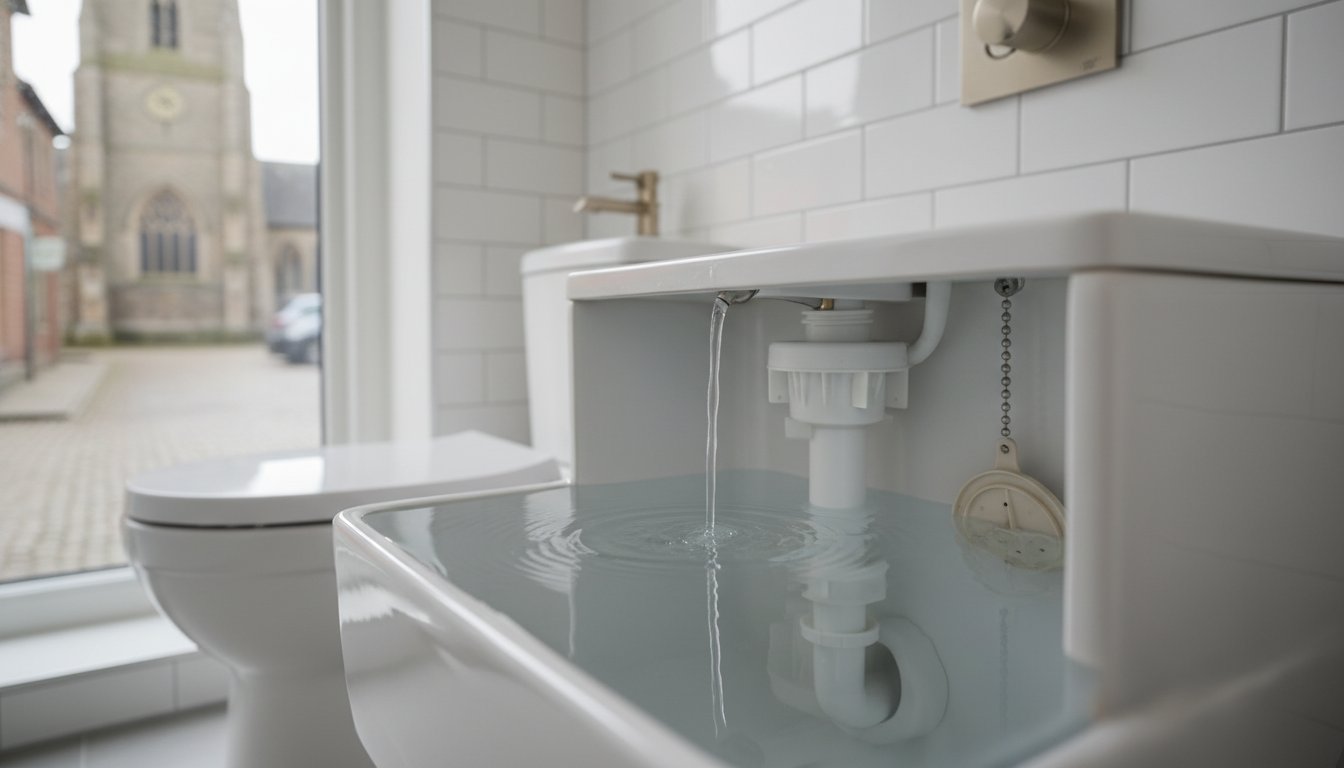
Did you know a single leaking toilet can waste up to 400 litres of clean water every day? This is enough to fill five large bathtubs, and it often happens without you noticing anything more than a faint hiss. You likely recognise that persistent trickling sound that echoes through your Norwich home at night. It’s a frustrating problem that makes you worry about a massive bill from Anglian Water or the risk of water damage to your bathroom floor.
This guide identifies the most frequent running toilet causes so you can stop the noise and the waste immediately. You’ll learn exactly how much this constant flow costs your household and discover which specific parts, like a perished flapper or a faulty fill valve, need replacing to fix the issue for good. We provide a clear breakdown of simple DIY solutions and explain when it’s time to call a professional Norwich plumber to ensure your home stays dry and efficient. We want to help you silence the noise and regain your peace of mind with a reliable, working bathroom.
That persistent, low-level hiss or the sound of a constant trickle in your bathroom is more than a minor annoyance. For many Norfolk homeowners, it becomes a background stressor that disrupts sleep and signals a waste of resources. Ignoring these early warnings is a mistake. Understanding the mechanics of how a toilet works helps you realise that even a small leak indicates a component failure. While some running toilet causes are simple to fix, others require professional attention to prevent escalating costs.
The financial impact is often higher than people expect. A leaking cistern can add over £300 to your annual Norfolk water bill. This isn’t just a trickle of water; it’s a trickle of money leaving your bank account every month. From an environmental perspective, a running toilet can waste up to 400 litres of clean water every single day. This is roughly the equivalent of five full bathtubs being poured straight down the drain for no reason.
Beyond the bill, constant moisture creates a risk of secondary damage. We often see dampness around the toilet base that leads to floorboard rot. In older Norwich properties with timber flooring, this can turn a simple repair into a structural headache. Identifying the specific running toilet causes early protects your home from these expensive long-term consequences.
You don’t always need a plumber to find a leak. Look for ripples on the surface of the bowl water or faint brown “water trails” on the porcelain. These stains are caused by minerals in the water settling over time. Listen for the cistern refilling when no one has used the bathroom. If you’re unsure, try the “Food Colouring Test.” Drop a few drops of food colouring into the cistern tank. If the colour appears in the toilet bowl within 15 minutes without flushing, you have a confirmed leak.
Small leaks put constant pressure on your fill valve. This component isn’t designed to run 24/7, and the extra strain often leads to total mechanical failure. In Norwich, our water is relatively hard, which means constant running water results in accelerated limescale buildup on the internal parts. This crusty residue makes seals less effective and repairs more difficult. We find that preventative plumbing maintenance is always cheaper than an emergency call-out. Taking action today keeps your plumbing system reliable and your utility bills manageable.
Identifying common running toilet causes is the first step toward fixing a noisy cistern. Most issues stem from wear and tear on internal components that work under constant water pressure. In our experience serving homeowners across Norwich, these problems usually fall into three specific categories. Understanding how these parts interact helps you decide whether you can handle the fix yourself or if you need a professional hand.
The fill valve is the component responsible for letting water into the cistern after every flush. UK homes typically feature either a side-entry or a bottom-entry fill valve. If you hear a persistent hissing sound, it often indicates high internal pressure or a perished washer within the valve assembly. A stuck float is another frequent problem. When the float cannot rise freely, the valve stays open and water continues to flow. You should check for any limescale buildup or physical obstructions that might be snagging the float arm. If the valve is over 10 years old, we often recommend a full replacement to ensure long-term reliability.
Modern bathrooms in Norfolk often use push-button flush valves. These units rely on a rubber seal or flapper at the base to keep water in the cistern. Over time, this seal warps or collects debris, which breaks the watertight grip and lets water leak into the bowl. Traditional UK toilets use a siphon system instead. While siphons are incredibly reliable, the internal plastic diaphragm can split after 8 to 12 years of service. You can tell which system you have by looking inside the tank. A siphon looks like a large, often one-piece plastic housing, while a flush valve is a slimmer unit with a central cable or rod. If you’re unsure which part you need, our local plumbing experts can provide a quick assessment and transparent pricing for the repair.
The internal overflow pipe is a vital safety feature. It prevents your bathroom from flooding by directing excess water into the toilet bowl if the fill valve fails to shut. If you see water constantly trickling into the overflow, your float is likely set too high. This isn’t just a nuisance; it’s a significant waste of resources. Insights on The True Cost of a Running Toilet show that a single faulty valve can waste hundreds of litres of water every day. You can often fix this by turning the adjustment screw on the float arm to lower the water level. Keeping the water roughly 25mm below the top of the overflow pipe is the standard for most UK cisterns. This simple adjustment often resolves running toilet causes without requiring any new parts.
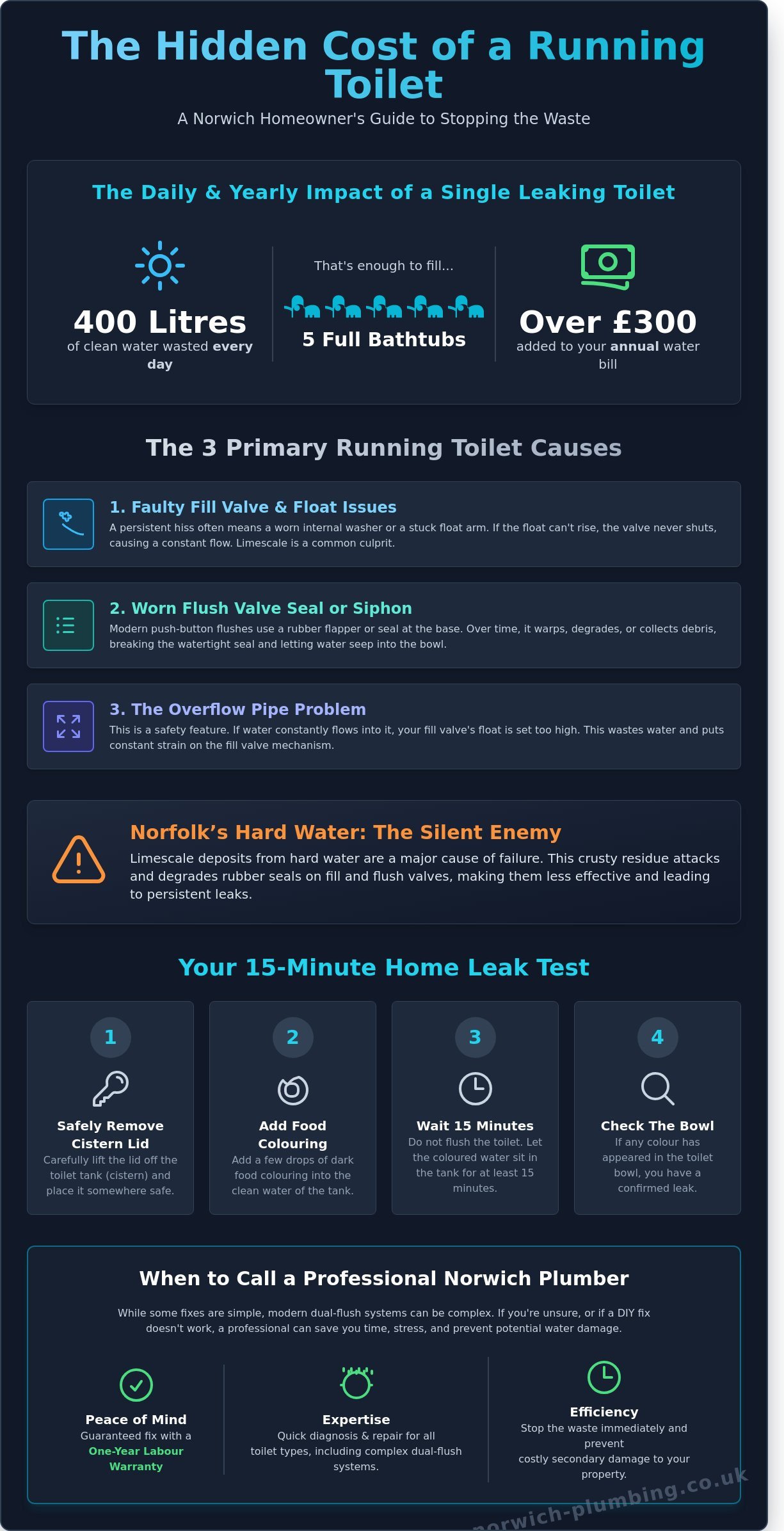
Norwich and the surrounding Norfolk area sit on a foundation of chalk and limestone. This geography means our local water contains high levels of calcium and magnesium. While these minerals are harmless to health, they are one of the primary running toilet causes in our region. As rainwater filters through the ground, it absorbs these minerals, which eventually find their way into your home’s plumbing system.
The chemical process is simple but destructive. When hard water sits inside your toilet cistern, the minerals crystallise into limescale. This white, chalky substance is incredibly abrasive. It specifically targets the rubber seals and washers that keep your toilet watertight. Over time, the scale causes the rubber to perish, making it feel stiff and brittle. This prevents the seals from seating correctly, leading to a constant, wasteful flow of water into the bowl.
Limescale buildup on the fill valve is a frequent problem we see in local homes. If the mineral crust accumulates on the moving parts of the valve, the mechanism becomes “stuck.” This prevents the float from rising properly to shut off the water. You can often find a Step-by-Step Diagnostic Guide for Homeowners to help identify if your valve is sticking. Without a smooth movement, the cistern continues to fill indefinitely, sending excess water down the overflow pipe.
You can usually spot mineral damage by peering inside the cistern. Look for white, crusty deposits on the plastic components. If the rubber seals feel stiff or “crunchy” when you press them, they have likely lost their flexibility. This is part of the “Hard Water Cycle” in Norwich. Because our water is so mineral-heavy, internal components often require maintenance or replacement every 18 to 24 months; this is significantly more frequent than in soft water areas like Manchester or Devon.
Installing a water softener is the most effective way to protect your plumbing. These systems remove calcium and magnesium before they reach your taps, potentially doubling the lifespan of your toilet’s internal parts. For minor buildup, you can clean the flush seal with a mild descaler or white vinegar to restore its function. If the scale is thick or the rubber has perished, a professional toilet repair norwich is necessary. We replace damaged components with high-quality parts that stand up better to our local water conditions.
Diagnosing a faulty toilet starts with a calm, methodical approach. First, locate the isolation valve on the pipe leading to the cistern. Turn this valve clockwise to stop the water flow. This prevents accidental overflows while you work. Carefully lift the cistern lid using both hands. These ceramic lids are heavy and break easily if dropped. Place the lid on a towel or a rug in a safe corner of the room to avoid any accidental damage to your bathroom tiles.
Once the lid is off, perform a dry-run inspection. Flush the toilet and watch the internal components move. You are looking for parts that snag, stick, or fail to return to their original position. Check the fill tube, which is the small flexible hose, to ensure it is still clipped to the overflow pipe. If the float sits too high, water will constantly pour into the overflow, which is one of the most frequent running toilet causes in Norfolk homes. The same mineral-heavy water that causes cistern problems can also lead to a slow draining sink elsewhere in your home, so it is worth checking your other fixtures while you investigate.
This test identifies whether the leak is at the top or the bottom of the cistern. Turn off the water supply and wait for 20 minutes. If the water level in the cistern drops, the flush valve seal or flapper is leaking. This means water is escaping into the bowl. If the water level remains the same but the toilet was previously running, the fill valve is failing to shut off properly. This simple check saves you from buying parts you do not need.
Mechanical issues often cause a toilet to run continuously. Check the lift chain connecting the handle lever to the flush valve. If the chain is too tight, it prevents the seal from sitting flat. If it is too long, it can get caught under the seal itself. Aim for about 1cm of slack. Ensure the flush handle moves freely. Limescale often builds up around the handle mounting, causing it to stick in the down position and keeping the valve open. A quick clean with a damp cloth often solves this without any tools.
Modern toilets use various plastic components that become brittle over time. If you notice physical cracks in the syphon or the fill valve body, adjustments will not work. Be careful when tightening plastic nuts or connections. Over-tightening can cause the plastic to split, resulting in a sudden, high-pressure leak. If the problem persists after you have checked the seals and float height, it is time to seek professional help. Knowing when to stop prevents a minor annoyance from becoming a costly emergency. If you are struggling to fix the issue, contact a local plumber norfolk to restore your bathroom to full working order.
Need a reliable repair? Contact Norwich Plumbing today for a transparent, fixed-price quote on all toilet repairs.
Identifying the primary running toilet causes is a great start, but modern plumbing often requires a specialist touch. Many homes now feature complex dual-flush systems. These units have intricate internal linkages that are delicate and easily misaligned during DIY attempts. Viktor’s Plumbing Services provides a reliable, expert service to ensure these systems function perfectly without the risk of further damage. Every repair we carry out includes a one-year labour warranty. This guarantee reflects our commitment to high-quality workmanship and gives you lasting confidence in your home’s plumbing.
Choosing a professional fix isn’t just about stopping a noise; it is about protecting your finances. A toilet that runs constantly can waste hundreds of litres of water every day. Over a year, this adds significant costs to a metered water bill. By choosing transparent pricing and a permanent fix, you avoid the cycle of temporary repairs that fail after a few weeks. Viktor’s Plumbing Services focuses on providing a service that is both affordable and dependable for every customer.
Limescale is a constant challenge for Norfolk homeowners. Viktor’s Plumbing Services uses high-quality, scale-resistant components when replacing entire valve units to ensure your toilet remains future-proofed. During a service, we often find secondary issues that require attention. For instance, we can fix a leaking toilet base while the cistern is being repaired. This comprehensive approach prevents damp issues and protects your floorboards. Professional repairs are a smart investment that pays for itself through reduced utility costs and the prevention of structural water damage.
A toilet that runs constantly can suddenly turn into an overflowing emergency. If water starts spilling onto your floor, you need immediate help. Viktor’s Plumbing Services provides 24/7 emergency support across the entire NR postcode area. Whether you are in the centre of Norwich, Wymondham, or Aylsham, we can be on-site quickly to stop the flood. With 20 years of experience, Viktor’s Plumbing Services has seen every possible fault. We specialise in diagnosing “ghost flushes” where the toilet refills randomly. These silent leaks are often missed by homeowners but are easily spotted and cured by a trained eye.
Scheduling a visit is straightforward and stress-free. Viktor’s Plumbing Services offers a free, no-obligation quote for every repair, so you’ll know the costs upfront. There are no hidden fees or surprise charges. We can book a time that suits your schedule, ensuring minimal disruption to your day. You don’t have to tolerate the constant sound of running water or the worry of a high water bill. A quiet, efficient, and fully functional toilet is just a phone call away. Contact Viktor’s Plumbing Services today to secure your booking and get your plumbing back in top condition.
A leaking cistern is more than a background noise; it’s a drain on your finances. Industry data from Anglian Water shows that a single faulty valve can waste up to 400 litres of water daily. Understanding the various running toilet causes, such as Norfolk’s mineral-heavy hard water or a perished flapper, helps you take control of your home maintenance. Quick action prevents minor drips from turning into expensive plumbing emergencies. If you notice other drainage problems around your home, such as a slow draining sink in your kitchen or bathroom, addressing these issues together can save you time and money on call-out fees.
Viktor provides a dependable solution for homeowners who want the job done right the first time. We offer 20 years of local plumbing experience and back every fix with a full one-year labour warranty. Our team remains on call with 24/7 emergency support across Norfolk to ensure you’re never left stranded. We take pride in our transparent approach and our commitment to the local community. You can trust us to handle your repair with the care it deserves.
Book your expert toilet repair in Norwich today and enjoy a reliable home once again.
A running toilet isn’t usually a plumbing emergency that will flood your home immediately, but it requires prompt attention to prevent high water bills. You don’t need to call us at 3 am unless the water is overflowing onto the floor. However, leaving it for weeks can lead to mechanical wear on your fill valve. We recommend booking a repair within 24 to 48 hours to keep your home running efficiently.
Yes, the hard water in Norwich contains high levels of calcium carbonate, often exceeding 200mg per litre. This mineral content creates limescale deposits on the internal components of your cistern. Limescale prevents the flapper or flush valve from sealing correctly, which is one of the most frequent running toilet causes we see in Norfolk homes. Regular descaling or replacing worn parts usually solves this local issue.
A leaking toilet typically wastes between 200 and 400 litres of water every single day. According to data from UK water companies, a severe leak can lose up to 8,000 litres in a week. This waste can add over £300 to your annual water bill if you use a meter. Fixing the leak quickly protects both the environment and your household budget.
You can often fix simple issues like a tangled lift chain or a dirty flapper without professional help. Check the cistern to see if the internal components move freely and aren’t caught on anything. If the problem involves replacing a complex syphon or a faulty inlet valve, we suggest calling a qualified plumber. We provide quick repairs that ensure your toilet functions perfectly without the risk of DIY leaks.
Intermittent running happens when water slowly leaks from the cistern into the bowl through a faulty seal. When the water level in the tank drops below a certain point, the fill valve opens automatically to top it up. This creates a short hissing sound that people often call a ghost flush. It usually indicates that your flush valve seal is worn or covered in debris.
The food colouring test is a simple way to confirm a hidden leak between the cistern and the bowl. Add 10 drops of bright food colouring into the water inside your toilet cistern and wait for 20 minutes. If the water in the toilet bowl changes colour before you flush, your seal is leaking. Flush immediately after the test to prevent the dye from staining the ceramic surfaces.
A running toilet rarely causes a flood because the internal overflow pipe directs excess water safely into the toilet bowl. You’ll only face a flood if both the fill valve fails and the overflow pipe is blocked or incorrectly sized. We always check these safety features during a service visit to ensure your home stays dry. If you see water on the floor, turn off the isolation valve immediately.
Typical costs for a professional plumber in the UK range from £60 to £100 for a standard repair visit, plus the price of replacement parts. Prices vary based on the complexity of the mechanism and the time required for the fix. We provide transparent pricing and free no-obligation quotes for all residents in Norwich and the surrounding villages. This ensures you know exactly what the job costs before we start work.
[…] amount of water and can lead to costly water bills and potential water damage. Understanding the running toilet causes can help you identify whether it’s a simple fix or requires professional attention. We […]
[…] also dealing with a toilet that won’t stop running, you might want to learn about running toilet causes and how to fix them to address multiple issues at once. Similarly, if you’ve noticed a slow draining sink […]