Professional Plumbing Services in Norwich
E-mail us: viktors.plumbing@gmail.com
24 Hour Emergency Plumbing Service


During a cold snap, a single burst pipe can release up to 400 litres of water an hour. For many UK homeowners, this leads to emergency repair bills that can easily exceed £7,500. It’s a nightmare scenario every Norfolk homeowner dreads when the temperature plummets below zero. You’re right to be concerned about the potential cost and the immense disruption a burst pipe can cause. With so much conflicting advice online about dripping taps and turning off your water, it’s hard to know what truly works.
That’s why our experienced Norwich plumbers have created this straightforward guide. We will provide you with the essential, proven techniques to prevent frozen pipes, giving you complete peace of mind that your home is secure this winter. This guide delivers a simple checklist for protecting vulnerable areas, clears up common myths, and explains the critical signs that mean it’s time to call a professional for help.
A burst pipe is one of the most destructive emergencies a homeowner can face. Many people think it’s the expansion of ice that splits the metal, but the real cause is far more powerful: trapped water pressure. Understanding this process is the first step you can take to prevent frozen pipes and protect your property. Here in Norfolk, our damp, coastal air can make external brickwork colder and wetter than in other parts of the UK, accelerating the freezing process once temperatures drop.
While any temperature at or below 0°C poses a risk, our experience shows that the danger becomes critical for unprotected pipework when the thermometer hits -6°C. At this point, the combination of sustained cold and immense internal pressure can lead to disaster, turning a simple plumbing issue into major structural damage.
When water turns to ice, it expands by approximately 9%, creating a solid plug inside your pipe. This plug traps the remaining liquid water between the blockage and a closed tap. As more water freezes, the pressure on this trapped water builds relentlessly, reaching levels of over 2,000 pounds per square inch. Thermal expansion in plumbing describes how cold makes pipe materials contract and become brittle, while the freezing water inside expands, creating a powerful and destructive conflict. This pressure seeks out the pipe’s weakest point, which is rarely a straight section. It is almost always a joint, a 90-degree bend, or a section of copper weakened by age or corrosion.
Every home has its weak spots, and Norfolk’s diverse architecture presents unique challenges. Knowing where your home is most vulnerable is key to effective prevention.
Ignoring these risks can be an expensive mistake. The Association of British Insurers (ABI) reports that during a cold snap, the average insurance claim for a burst pipe is approximately £9,100. This figure covers not just the plumbing repair, but also the extensive water damage to floors, walls, electrics, and furniture. Taking simple, proactive steps to prevent frozen pipes provides peace of mind and protects you from significant financial loss.
The most effective way to prevent frozen pipes is to conduct a ‘cold spot’ audit of your home before winter arrives. A burst pipe rarely happens by chance; it’s almost always a failure in a predictable, vulnerable location. By identifying these weak points in your plumbing system, you can take simple steps to avoid a costly and stressful emergency.
Your audit should start with any pipework exposed to unheated air. This includes pipes running along external walls, especially on the north-facing side of your property, and those in uninsulated cupboards under sinks. The most critical areas, however, often go overlooked.
Your loft is a high-risk zone. Unlike a basement, a well-insulated loft traps heat below, leaving the space itself at near-freezing temperatures. Check that all pipework, tanks, and headers are lagged with thick foam insulation. Pay special attention to ‘dead legs’-old, capped-off pipes holding static water. These are prime candidates for freezing and splitting. Lines in unheated garages or outbuildings require the same robust protection.
Your outside tap is a primary vulnerability. Always disconnect garden hoses before the first hard frost in November. Trapped water will freeze and expand back into the pipe inside your wall. A purpose-built insulated tap jacket, costing around £10, is far more effective than makeshift wrapping. Also, monitor overflow pipes for icicles. An icicle is a clear sign of a slow leak that needs fixing before it freezes solid.
While securing your plumbing, it’s also wise to check for other external winter vulnerabilities. For instance, strong winds can damage fencing, so checking for loose panels or posts is a good preventative step. For DIY repairs or new projects, sourcing quality materials from a trusted online supplier like Romford Fencing Ltd ensures your property remains secure throughout the season.
Don’t forget your boiler’s condensate pipe. This small plastic pipe runs from your boiler to an outside drain and is a common cause of winter boiler failures in the UK. Because it carries only a slow trickle of water, it freezes easily, causing your boiler to lock out and shut down your heating when you need it most. Insulating this pipe with foam lagging is a vital job.
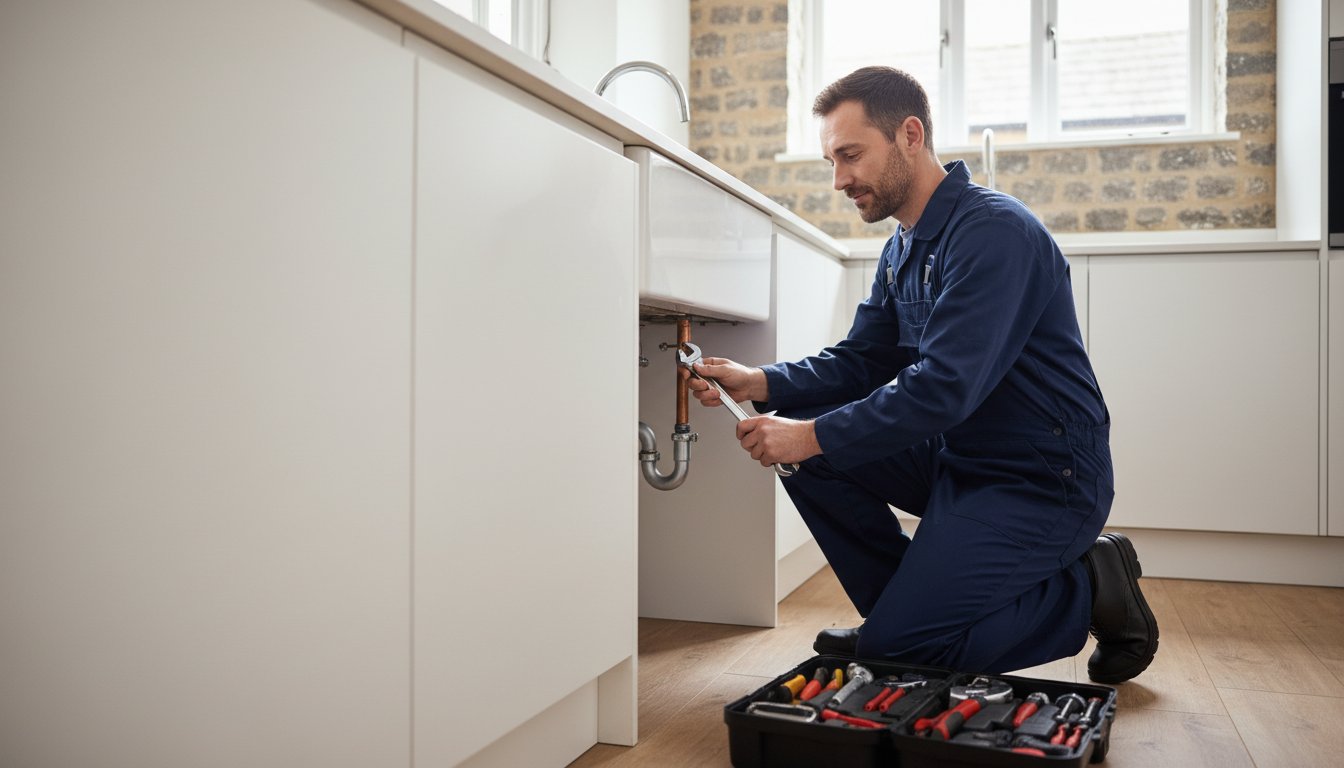
Identifying these risks is the first step. A thorough home audit can seem daunting, but the American Red Cross guide provides an excellent checklist for winter home preparation. If your audit reveals old, complex, or poorly insulated pipework, it’s a problem best not left to chance. Our local Norwich engineers can provide a professional assessment and ensure your home’s plumbing is secure for the winter ahead.
Deciding how to protect your home from a winter plumbing disaster involves balancing cost, effort, and effectiveness. Many homeowners in Norfolk can handle basic preventative tasks. However, knowing when to call a professional is key to guaranteeing your pipes are secure when the temperature plummets. Let’s compare your options so you can make an informed decision.
Pipe insulation, or lagging, is your first line of defence. For most indoor pipes in attics or garages, polyethylene foam lagging is the standard for DIY jobs. It’s affordable, easy to cut, and simple to fit. For external pipes or boiler condensate lines exposed to the elements, we recommend a more durable, closed-cell rubber-based insulation. It offers superior resistance to moisture and UV degradation. For maximum protection against the UK’s harshest winter weather, ensure any lagging you install is at least 19mm thick.
Another common piece of advice is to leave a tap dripping. This can help, as moving water freezes more slowly and the drip relieves pressure buildup from any ice that does form. However, it’s not a foolproof way to prevent frozen pipes. A slow drip can waste over 1,500 litres of water over a winter, adding to your utility bill, and there’s a risk the drainpipe itself could freeze. The American Red Cross guide to preventing frozen pipes offers more insight into this method, but we advise using it only as a last resort in a sudden cold snap.
Modern technology offers more reliable solutions. Smart devices provide excellent remote protection, ideal for when you’re away from home.
Your central heating is a powerful tool. If you’re leaving your home vacant for a few days, don’t turn the heating off completely. Set the thermostat to a minimum of 15°C. This “magic number” provides enough background heat to protect the system without running up a huge bill. For pipes in unheated areas, use the “Hatch and Door” method. Simply open the loft hatch and the doors to under-sink cupboards. This allows warmer air from your home to circulate, protecting vulnerable pipework. For high-risk external lines, a professionally installed trace heating cable provides active, thermostatically controlled warmth right where it’s needed.
Ultimately, the decision comes down to a simple cost-benefit analysis. Spending £30 on DIY lagging is a sensible, low-cost step. Investing in a professional winter-proofing service from Viktor’s Plumbing Services might cost between £150 and £250. This seems significant until you compare it to the alternative. An emergency call-out for a burst pipe can easily cost over £250, and that’s before any repairs. The Association of British Insurers reports that the average cost of water damage claims from frozen pipes is £9,100. Prevention is not just better than a cure; it’s significantly cheaper.
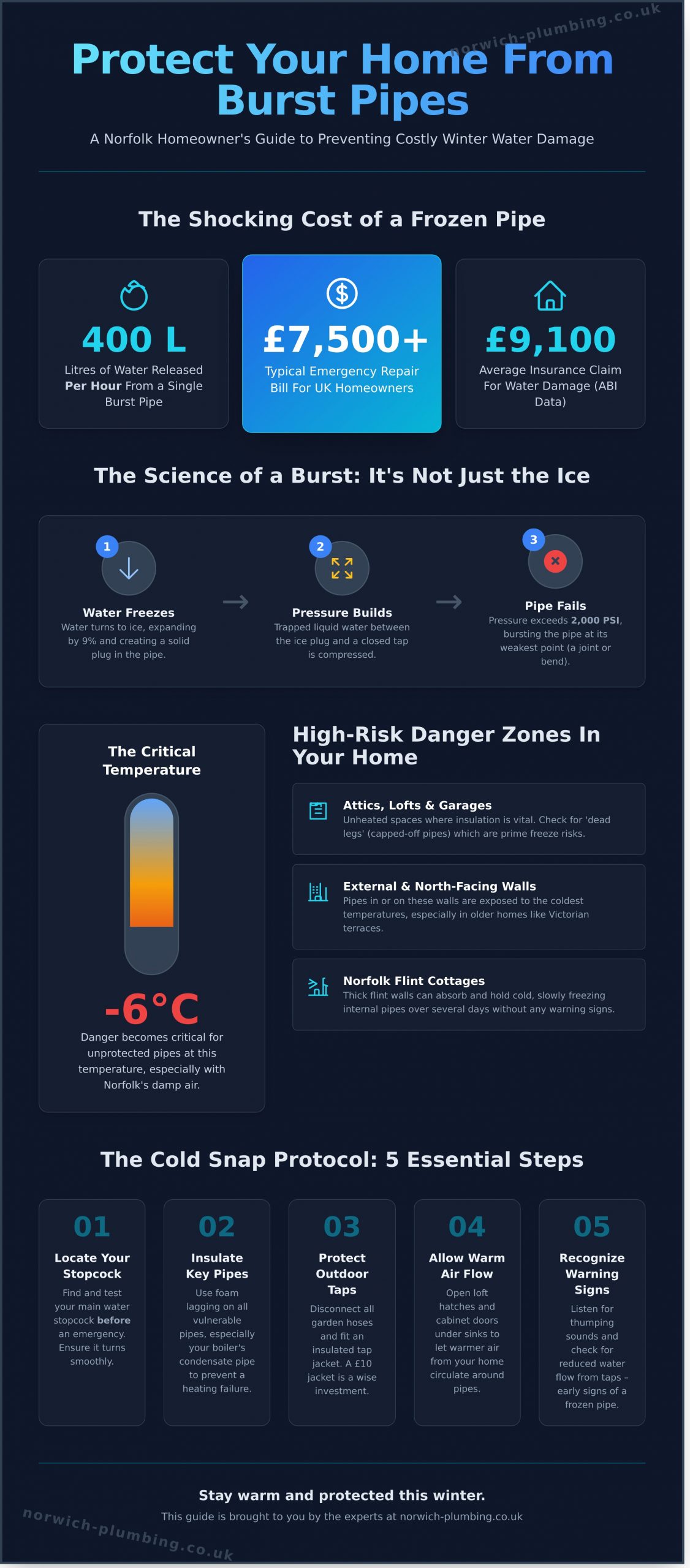
The Met Office has issued a yellow weather warning for Norwich, with temperatures expected to fall below freezing. This is the critical moment to act. A few simple steps taken this evening can be the difference between a warm, comfortable home and a costly burst pipe emergency. Follow this five-step protocol to protect your property and ensure you can effectively prevent frozen pipes.
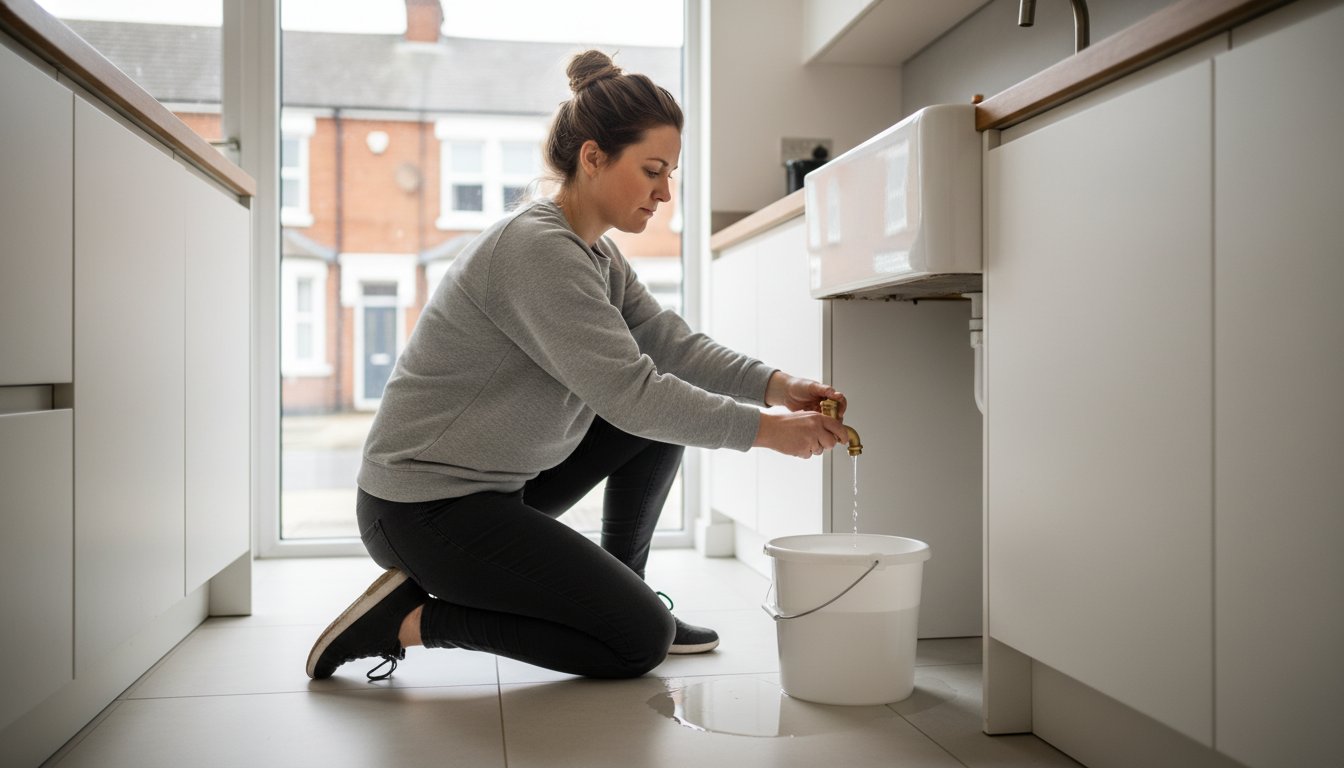
Your immediate priority is to know you can shut off your water supply if the worst happens. This starts and ends with your internal stopcock (also known as a stop tap).
In many Norwich homes, particularly Victorian terraces, the stopcock is located under the kitchen sink. In more modern properties, you might find it in a downstairs utility room, under the stairs, or in a hallway cupboard near the front door. Find it now, before you need it. Once located, ensure everyone in the house knows where it is. A simple, brightly coloured tag can make it easy to spot in a dark, panicked situation.
If you find your stopcock is stiff or seized, it is a significant risk. If you cannot turn it by hand, do not force it with a wrench as this can break the valve. A seized stopcock is an emergency waiting to happen. If you’re unsure or the valve won’t budge, our Gas Safe registered engineers can replace it for you.
With your stopcock located, you can now focus on maintaining warmth where it’s needed most. It’s a mistake to turn your heating completely off overnight during a sub-zero cold snap. Water inside static, cold pipes is far more likely to freeze. Instead, set your thermostat to a low but constant temperature, around 13-14°C. This ensures a consistent, gentle circulation of heat throughout your system, which is one of the most effective ways to protect your plumbing.
Pipes are most vulnerable in unheated spaces like lofts, garages, and kitchen cupboards. You need to allow the warm air from your home to reach them. Open the doors to vanity units and kitchen cabinets where pipes are located. This simple action allows warmer air to circulate, protecting the pipework. For pipes and water tanks in the loft, opening the loft hatch an inch or two allows rising heat to provide vital protection.
Finally, check your Thermostatic Radiator Valves (TRVs). Don’t turn them completely off in unused rooms. Instead, set them to the ‘frost’ or ‘*’ setting. This allows a small amount of warm water to flow through if the room temperature drops to around 5-7°C, preventing the pipes from freezing without wasting significant energy.
If you plan to be away from your property for more than 24 hours during the cold spell, communication is key. Ask a trusted neighbour to check on your home periodically. Leave them a key, your contact details, and most importantly, show them exactly where the stopcock is and how to turn it off. For a comprehensive approach to protecting your plumbing before any trip, our holiday plumbing tips for Norwich homeowners walk you through every step to secure your property before you leave. A quick text message to a neighbour can save you from thousands of pounds in water damage.
Even with careful preparation, the harsh Norfolk winters can catch you off guard. Period properties, in particular, have hidden vulnerabilities that can lead to frozen pipes despite your best efforts. Recognising the early warning signs is the first step to avoiding a catastrophe. If you turn on a tap and only a trickle, or nothing at all, comes out, you likely have a blockage. You might also hear unusual thumping or gurgling sounds from within your walls as water struggles to pass the ice.
At this point, it’s critical to act fast, but also safely. The biggest mistake a homeowner can make is trying to thaw a pipe with a naked flame, like a blowtorch. This poses a significant fire risk and can cause the trapped water to boil, creating immense pressure that leads to an explosive burst. Your best course of action is to turn off your water at the main stopcock and call a professional immediately. We provide a 24/7 emergency response for homeowners in Norwich, Aylsham, and the surrounding Norfolk areas, ensuring a qualified plumber is on hand when you need us most.
We use specialised, modern equipment to apply controlled, gentle heat to the affected area. This method safely thaws the ice inside without damaging the pipe itself, whether it’s modern PEX plastic or traditional copper. Once water flow is restored, our job isn’t done. We conduct a thorough inspection to check for any secondary damage, such as hairline fractures or stressed joints, that the ice expansion may have caused. For complete peace of mind, we provide a one-year labour warranty on all emergency burst pipe repairs.
The most effective way to handle a burst pipe is to stop it from ever happening. Our “Winter-Ready” inspection is a proactive service designed to identify and fix potential problems before the first frost arrives. It’s the smartest way to prevent frozen pipes and protect your home. We believe in total transparency, so you’ll receive a clear, fixed-price quote for any recommended work like new lagging or a stopcock replacement before we begin.
Our comprehensive inspection includes:
Don’t wait for a cold snap to reveal a weakness in your plumbing. Contact Viktor today for a professional winter plumbing check and ensure your home is fully prepared for the months ahead.
Understanding your home’s vulnerable areas and acting quickly during a cold snap are your first lines of defence. These simple measures are crucial if you want to effectively prevent frozen pipes and avoid the thousands of pounds in damage a burst pipe can cause. It’s about being prepared before the temperature plummets.
For guaranteed protection, a professional assessment provides complete peace of mind. With 20 years of dedicated experience in Norfolk homes, Viktor’s Plumbing Services offers a comprehensive Winter Plumbing Audit to identify risks you can’t see. We stand by our work with a full one-year labour warranty on all repairs and provide a 24/7 emergency response for burst pipes.
Don’t wait for a disaster. Book a Winter Plumbing Audit with Viktor and secure your home today. A small amount of preparation ensures your home stays warm and dry all season long.
Water begins to freeze at 0°C, but it often takes a sustained period at this temperature or lower for the water inside a pipe to freeze solid. The risk significantly increases when the air temperature around the pipe drops to -5°C or below for several hours. Pipes in uninsulated areas like lofts, garages, or against external walls are most vulnerable. Even a brief but severe cold snap can be enough to cause a blockage.
Yes, allowing a tap to drip slowly can help prevent a pipe from freezing. The constant movement of water makes it much harder to freeze than still water. More importantly, it relieves the immense pressure that builds up between the tap and the ice blockage. This pressure is what actually causes pipes to burst, not the ice itself. It’s a good temporary measure during a cold spell, but it isn’t a substitute for proper pipe insulation.
In older Norwich properties, the main stopcock is most commonly found under the kitchen sink. If it isn’t there, check other logical locations on the ground floor, such as in a utility room, a downstairs cloakroom, or a cupboard under the stairs. Some older terraced houses in Norfolk may even have an external stopcock, located outside under a small metal cover in the pavement. It’s vital to find it before you have an emergency.
First, turn off your water supply at the main stopcock to prevent flooding if the pipe thaws and reveals a split. Then, open the tap nearest to the frozen section to allow water to escape as the ice melts. Check the pipe carefully for any visible cracks or bulges. Do not apply intense, direct heat. Call a certified local plumber immediately, especially if you see any damage or are unsure how to proceed safely.
Most home insurance policies cover water damage from a burst pipe, but you must read your policy’s specific terms. Insurers often require you to have taken reasonable steps to prevent frozen pipes. This might mean leaving your heating on a constant low temperature, around 12-15°C, or fully draining your water system if you’re away for more than 14 days in winter. Failing to do this could potentially invalidate your claim. Before travelling, reviewing our essential holiday plumbing tips can help ensure your home meets your insurer’s requirements while you’re away.
Yes, a burst pipe can introduce contaminants like dirt and bacteria into your home’s water system during the break and subsequent repairs. After resolving such a plumbing issue, it’s a good time to consider the overall purity of your water. For comprehensive protection against a wide range of contaminants, including those that may enter after a pipe burst, a dedicated system from a specialist like Tradewinds Water Filtration offers a reliable, long-term solution.
For a standard 3-bedroom house in the Norwich area, having a professional plumber insulate your vulnerable pipes typically costs between £150 and £300. This price includes both the foam lagging materials and the labour. Considering that the average insurance claim for water damage from a burst pipe is between £4,000 and £7,000, professional lagging is a very small and worthwhile investment for your peace of mind.
Yes, plastic PEX pipes can freeze, but they are significantly less likely to burst than rigid copper or PVC pipes. PEX is a flexible material that can expand to accommodate the pressure from ice forming inside it. However, repeated freeze-thaw cycles can still weaken the pipe material or damage the fittings and joints over time. All pipework in vulnerable, unheated areas should be properly insulated, regardless of the material.
Using a hairdryer on a low heat setting is one of the safer DIY methods, but you must be extremely cautious. Never use a blowtorch, heat gun, or any kind of open flame, as this is a serious fire hazard and can damage the pipe. Keep the hairdryer moving and never focus it on one spot. Start thawing from the tap end and work your way back to the blockage. If you have any doubts, call a professional plumber.
[…] your loft hatch slightly open. This simple step allows warm air to reach the attic, which helps prevent frozen pipes in the roof space. Be particularly cautious with pipes in unheated outbuildings or garages. These […]