Professional Plumbing Services in Norwich
E-mail us: viktors.plumbing@gmail.com
24 Hour Emergency Plumbing Service


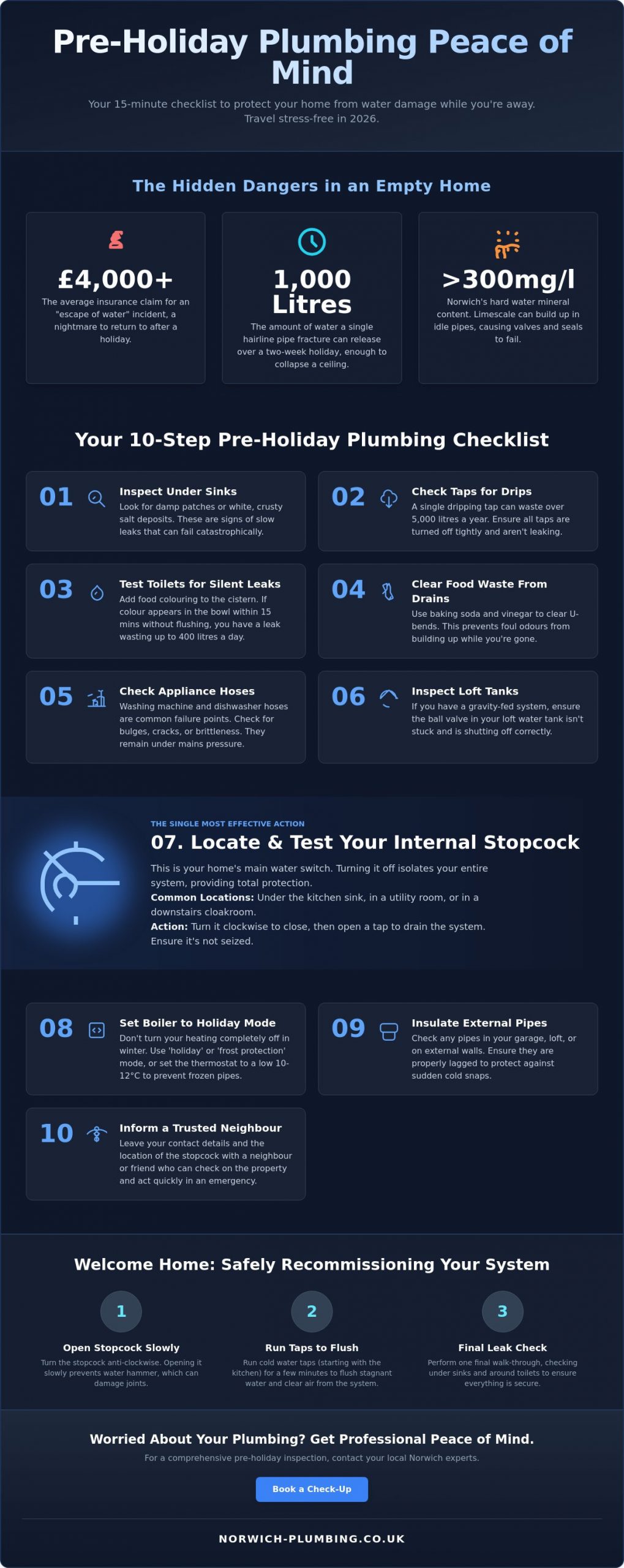
Last winter, a family in Thorpe St Andrew returned from a week in the sun to find their kitchen ceiling on the floor because of a hairline pipe fracture that leaked for days. It is a nightmare scenario that ruins the holiday spirit and often leads to insurance claims exceeding £4,000 according to industry data. You have worked hard for your break, and the last thing you need is the nagging anxiety that your boiler might fail or a leak could go unnoticed while you are away. We understand that you want to enjoy your trip without worrying about high energy bills or the threat of a flooded hallway.
By following these professional holiday plumbing tips, you can secure your property in less time than it takes to pack a suitcase. We promise that a simple 15-minute plumbing audit will protect your Norfolk home from floods and the stress of expensive emergency call-out fees. This guide provides a clear, actionable checklist for 2026, covering essential stopcock checks and the most efficient settings for your Gas Safe registered boiler. You will learn exactly how to prepare your pipework so you can travel with total peace of mind.
Returning from a relaxing break to find your Norfolk home underwater is a devastating experience. The emotional toll of lost photographs and ruined furniture often outweighs the financial cost of the repairs. You might think a tiny drip from a kitchen tap is harmless, but over a fourteen-day holiday, that small leak can release over 1,000 litres of water. This volume is enough to collapse ceilings and rot floor joists. These holiday plumbing tips help you move from a passive strategy of hoping for the best to an active strategy of total home protection.
Norwich is known for its very hard water, with mineral levels often exceeding 300mg/l of calcium carbonate. When your plumbing sits idle for weeks, these minerals settle. Limescale builds up rapidly in stagnant water, which can seize up internal valves or cause seals to become brittle and crack. We see this frequently in properties where fixtures haven’t been used for an extended period. Taking ten minutes to prepare your system ensures that your pipes remain functional and your home stays dry while you are away.
Data from the Association of British Insurers (ABI) shows that UK insurers pay out approximately £2.5 million every single day for domestic “escape of water” claims. Many homeowners don’t realise that insurance providers can legally reject a claim if the property was left unoccupied for a specific period without the water being isolated. This is a common clause in many standard policies. In areas like the Golden Triangle, many houses were built between 1880 and 1910. These older properties often feature original lead piping or aging copper joints that are significantly more prone to failure than modern plastic systems. You don’t want to find out your insurance is void because you failed to take basic precautions.
Washing machine hoses are one of the most common failure points in a domestic setting. These rubber hoses stay under constant pressure even when the machine isn’t running. If a hose splits while you’re in the Mediterranean, the water will flow at full mains pressure until you return. You should also check your loft tanks and ensure the ball valve is working correctly. Many residents aren’t entirely sure what a stopcock is or where it’s located, which makes an emergency much harder to manage for a neighbour or relative checking on the house.
The climate in East Anglia can be unpredictable. Even in 2026, we still see sudden cold snaps that can cause external pipes to freeze and burst if they aren’t properly insulated. Preventative maintenance is the best insurance policy for any homeowner looking to protect their investment. Checking these vulnerable areas before you lock the front door provides the peace of mind you need to enjoy your trip. Following these holiday plumbing tips ensures your return to Norwich is as stress-free as your departure.
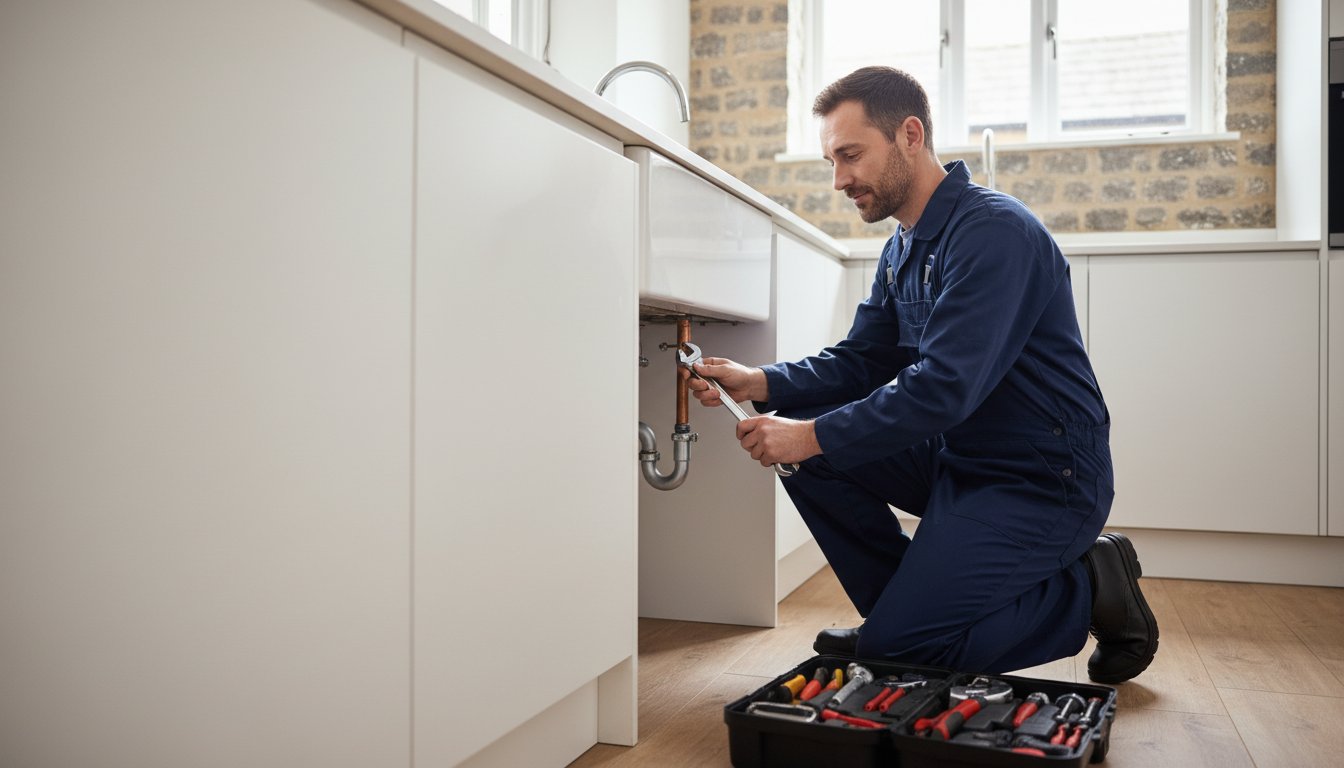
Preventing a domestic flood starts with a methodical walk-through of your property. Most holiday plumbing disasters are preventable if you catch the small signs of wear before they escalate. Start in the kitchen and move through each room, looking specifically for damp patches or salt deposits under every sink. These white, crusty buildups often signal a slow weep in the pipework that could fail under pressure while you’re away from your Norwich home.
If you spot anything suspicious during your inspection, refer to our guide on common plumbing problems for a deeper look at how to identify specific pipe failures. Taking twenty minutes to complete this checklist provides the reassurance you need to enjoy your break.
Check every tap for persistent drips. A single dripping tap can waste over 5,000 litres of water a year, but “silent” toilet leaks are even more damaging. These occur when water leaks from the cistern into the bowl. According to Waterwise, a leaking toilet can waste up to 400 litres of water every day. You can test this by putting a few drops of food colouring in the cistern; if the colour appears in the bowl after 15 minutes without flushing, you have a leak that needs attention.
Don’t leave food waste to sit in your U-bends. Clear your kitchen and bathroom drains before you head to the airport to prevent foul odours from greeting you upon your return. A simple mixture of 100g of baking soda followed by 200ml of white vinegar creates a natural chemical reaction that breaks down organic matter. Flush it through with hot water to keep the system fresh and clear.
The final step is the “Neighbour Protocol.” If you’re leaving a spare key with a friend in Norfolk, don’t just tell them where the plants are. Show them exactly where your internal stopcock is located and confirm it turns easily. If they need to enter in an emergency, they must be able to shut off the water supply instantly. If your stopcock is seized or difficult to reach, consider booking a reliable maintenance check before you depart to ensure your home remains secure.
Deciding whether to leave your boiler running or shut it down entirely is a common dilemma for Norwich homeowners. While turning the system off might seem like a way to save on energy bills, it often leads to more expensive repairs. A completely cold system is prone to seized pumps and, during the winter months, burst pipes. Modern boilers are designed to remain active, even when you aren’t using them. Our team at Norwich Plumbing always recommends keeping the system powered on to maintain its internal health.
Your boiler programmer is your best tool for balancing safety and efficiency. Most units manufactured after 2020 include a dedicated “Frost Protection” or “Holiday Mode.” These settings monitor the water temperature within the heat exchanger. If the internal temperature drops towards freezing, the boiler fires up automatically to protect its own components. Relying on this feature alone isn’t always enough for the rest of your home. You should manually set your room thermostat to ensure the entire property stays above a safe threshold. These holiday plumbing tips help you avoid returning to a flooded kitchen or a failed heating system.
Norfolk winters bring unpredictable cold snaps that can quickly compromise your plumbing. We recommend setting your thermostat to a minimum of 7 to 10 degrees Celsius. This level of background heat keeps water moving and prevents ice from forming inside your pipework. In older Norwich properties with less insulation, leave your loft hatch slightly open. This simple step allows warm air to reach the attic, which helps prevent frozen pipes in the roof space. Be particularly cautious with pipes in unheated outbuildings or garages. These areas are highly susceptible to freezing and often require additional lagging or a dedicated frost stat to stay safe during extreme weather.
When travelling during the summer, your priorities change to energy conservation and preventing mechanical stagnation. Switch your boiler to “Hot Water Only” or “Summer Mode.” This prevents the central heating from activating during a cool evening while you are away. Modern systems perform a “pump exercise” every 24 hours. The boiler briefly runs the pump to ensure the internal components don’t seize up from lack of use. For more detailed guidance on warmer weather maintenance, see our summer plumbing checklist. Following these holiday plumbing tips ensures your system remains healthy and ready for your return without wasting gas on unnecessary heating.
The internal stopcock acts as the master switch for your home’s entire plumbing system. Knowing its location and ensuring it works is the single most effective holiday plumbing tip we can provide. If a pipe bursts while you’re away, a closed stopcock limits the damage to the small amount of water already in the pipes rather than allowing hundreds of litres to flood your floors.
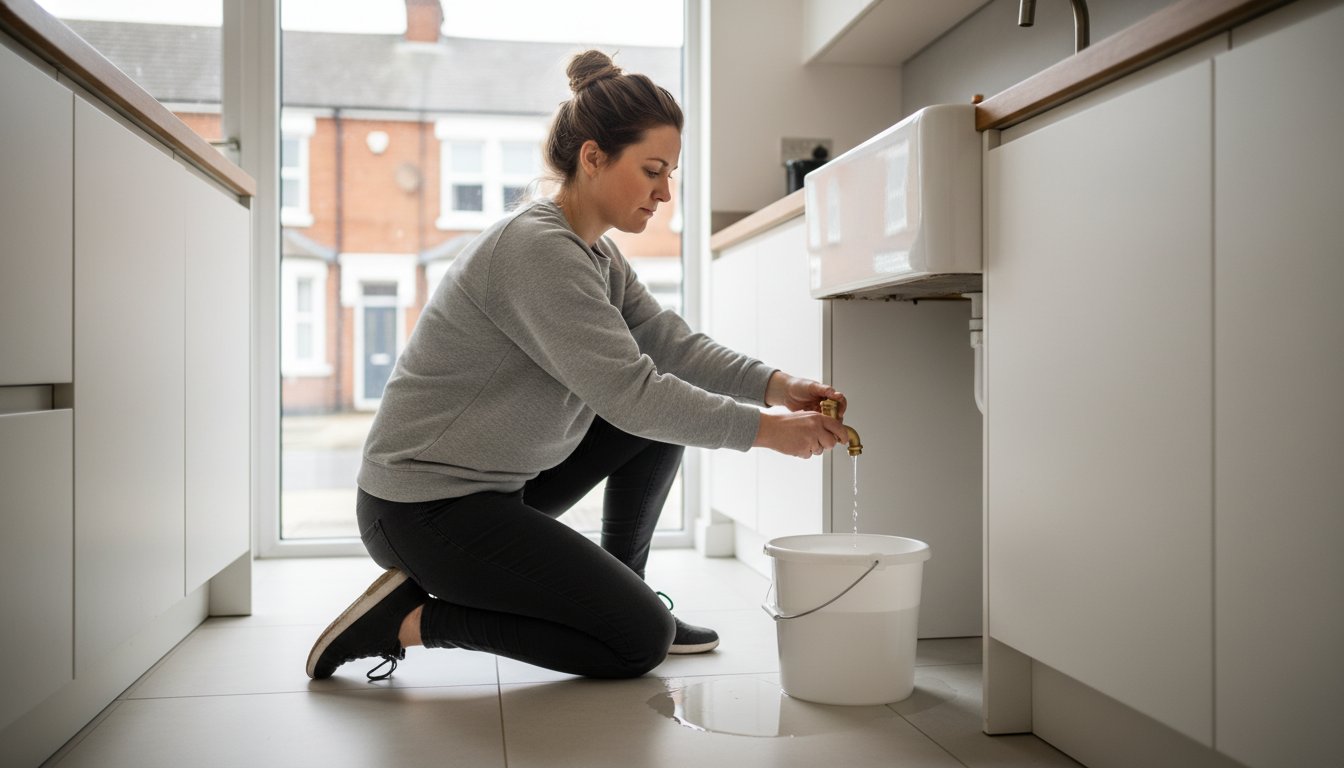
Shutting off the supply is only the first step. You should also perform a “drain down” to remove residual pressure. After you turn the valve clockwise to close it, open the cold taps on the ground floor. Let the water run until it stops completely. This simple action ensures that even if a joint fails during a cold snap, there’s no water left to cause a disaster. It’s a five-minute task that provides total peace of mind while you’re enjoying your break.
Norwich is famous for its beautiful Viktorian and Edwardian terraces, but these older homes often have stopcocks hidden in creative places. You’ll usually find yours under the kitchen sink, but don’t be surprised if it’s tucked away under the stairs, in a pantry, or even down in the cellar. In some 19th-century builds around the Golden Triangle, the valve might even be located in a small floor hatch near the front door.
Don’t confuse your internal stopcock with the external one. The external valve is located under a small metal cover on the pavement or your driveway and is the responsibility of Anglian Water. You need the internal one to control your home’s supply. If you’ve just moved into a new property, find this valve immediately. Label it with a bright tag so that every family member or house sitter can identify it during an emergency without searching through cupboards.
Stopcocks often sit untouched for years, which causes them to seize up due to limescale build-up. Test your valve at least twice a year. If it feels stiff, apply a small amount of penetrating oil to the thread and gently work it back and forth. Never use excessive force, as old brass fittings can snap under pressure. Use the “quarter-turn” rule: once you’ve opened the valve fully, turn it back clockwise by a quarter-turn. This small gap prevents the mechanism from seizing in the open position.
If the valve is completely stuck or shows signs of weeping, it’s time for an upgrade. You might need to call a general plumber to replace an ancient gate valve with a modern, reliable lever-style stopcock. These are much easier to operate, especially for those with restricted grip strength. Ensuring your “master switch” is functional is a vital part of your 2026 holiday preparations.
If you’re struggling to move your stopcock or can’t find it, book a professional plumbing health check with our local team before you travel.
Walking through your front door after a relaxing break should be a relief. Before you unpack your suitcase, perform a quick visual inspection of your home. Check the floor around your boiler and look under kitchen and bathroom sinks for any new damp patches. If you turned off your internal stopcock before leaving, don’t just crank it open to full power. Rapidly restoring pressure can cause a water hammer. This sudden surge of energy can rattle pipes and weaken joints that have been sitting idle. Open the valve slowly to let the system repressurise gently and safely.
Stagnant water in pipes poses a genuine health risk. When water sits for more than 7 days, the risk of Legionella bacteria increases. This is especially true during the warmer months in Norfolk when temperatures rise. You should never drink the first glass of water from the tap after a long absence. Run every tap and shower in your home for 2 to 5 minutes. This clears out the old, standing water and brings in a fresh, chlorinated supply from the mains. Always flush your toilets with the lid down during this initial cycle. It prevents bacteria-laden mist from entering the air you breathe. Following these holiday plumbing tips ensures your family stays safe upon your return.
Hidden leaks can waste over 400 litres of water a day without being obvious. To check for these, locate your water meter and look at the dial. If the numbers move while all taps are off, you likely have a leak somewhere in your system. Next, check your boiler pressure gauge. Most UK boilers should sit between 1.0 and 1.5 bar. A drop below 0.5 bar usually indicates a leak in the central heating circuit that needs immediate attention. For long-term protection, you can follow our guide on preventative plumbing maintenance to keep your system in top shape throughout the year.
If you find standing water or a burst pipe, act immediately to limit the damage. Don’t attempt complex repairs yourself if you aren’t confident in your technical skills. Contact a professional plumber emergency service to protect your Norwich property. We provide rapid response across the local area to resolve issues before they escalate. These holiday plumbing tips help you transition back to daily life without the stress of a domestic disaster.
Don’t leave your home’s safety to chance this year. Viktor provides nearly 20 years of local Norwich experience to every inspection and repair. We back all our work with a full one-year labour warranty so you can travel with complete confidence. If the unexpected happens, we offer 24/7 emergency support for homeowners across the Norfolk area. Book a pre-holiday plumbing health check with Viktor today and enjoy your time away knowing your plumbing is in expert hands. Have a safe and relaxing journey.
Yes, you should turn off your water at the main stopcock before leaving. This is the most effective way to prevent a small leak from turning into a major flood while your home is empty. Most stopcocks in Norwich properties are located under the kitchen sink or in a hallway cupboard. Once you close it, turn on your taps to drain the remaining pressure from the system for maximum safety.
It’s better to leave your boiler on a low constant setting rather than turning it off. Set your thermostat to at least 12°C to keep the air warm enough to prevent damp and protect your pipework. According to the Energy Saving Trust, maintaining a steady minimum temperature is more efficient than reheating a freezing house from 0°C when you return to Norfolk.
Prevent frozen pipes by installing foam lagging that meets BS 5422 standards on all exposed pipework in unheated areas. You should also open your loft hatch slightly to allow warm air to circulate around the water tanks. These holiday plumbing tips ensure that even if temperatures in Norwich drop below freezing, your pipes remain protected by a combination of insulation and background heat.
The frost protection setting is an automatic safety feature that monitors the water temperature inside your boiler. If the internal sensor detects the water has dropped to 5°C, it triggers the burner and pump to heat the system. This prevents the heat exchanger from freezing and cracking. Check your boiler manual to confirm this feature is active before you depart for your trip.
You only need to drain your plumbing system if you plan to be away for more than 30 days during the winter months. For shorter trips, keeping the heating on a low setting is usually sufficient. If you do drain it, you must shut off the stopcock and open every tap until the flow stops. This removes 100 percent of the water that could cause a burst.
Turn off your internal stopcock immediately and call a Gas Safe registered engineer. Don’t touch any electrical switches if water is near sockets or light fittings. Our team provides rapid repairs across the Norwich area to secure your property. Taking these steps within the first 15 minutes of discovery can significantly reduce the total cost of water damage restoration to your home.
No, you shouldn’t leave your taps on a drip. While this is common advice in other countries, it’s not suitable for UK plumbing systems. A slow drip can cause the external waste pipe to freeze solid, which eventually leads to a sink overflow and flooding. Using these holiday plumbing tips like proper insulation and a 12°C thermostat setting is a much safer and more reliable strategy.
The “rotten egg” smell usually comes from stagnant water sitting in your pipes or sink traps for 14 days. Bacteria can multiply in the 250ml of water held in a standard U-bend when it isn’t flushed regularly. To fix this, run all your taps and flush every toilet for 2 minutes. This clears the system and replaces the stagnant water with fresh, chlorinated water from the mains.
[…] For a comprehensive walkthrough of every step you should take before locking your front door, our holiday plumbing tips for Norwich homeowners guide covers the full pre-travel audit in […]
[…] is especially important to consider before leaving your property unattended; following professional holiday plumbing tips for Norwich homeowners can help you avoid returning to a costly water damage […]
[…] freezing and bursting while you are away. For a comprehensive step-by-step approach, our guide to holiday plumbing tips for Norwich homeowners covers everything you need to secure your property before you travel. This provides excellent […]